Contact Info: GunnyG@gmail.com
('Fair Use' Excerpts Back-Linked To Source)

*****

2008/2012

GyG: RON PAUL: 2008/2012 (The ONLY Choice)
CLICK FLAG!

GO TO THE "OTHER" GUNNY G BLOG! (CLICK FLAG)
ANOTHER GUNNY G BLOG!

ANOTHER GyG BLOG ~ CLICK FLAG!
Friday, March 03, 2006
"I DIDN'T RAISE MY BOY TO BE A SOLDIER," by Bill Monks
Marine Vignettes #77
I DIDN'T RAISE MY BOY TO BE A SOLDIER:
Excerpts from Grandpa’s Memoirs
By Bill Monks
August 1, 1999
(#77)
Each Morning on the way to James Madison, H.S., Brooklyn N.Y., Pep and
I would pass the Draft Board on Madison Pl. & Quentin Rd. We would see
either a friend or a relative hanging out in front, waiting to be
processed. It was like a giant drain sucking all the young men out of
the neighborhood. When we graduated in Jan of 44, we were still
seventeen, and too young for the draft. We worked in A & S Dept. store
for about 3 months as stock boys. When I got my draft notice, we both
quit without giving notice. We knew nothing about notice. We got one
heck of a lecture by a somber old gentleman, wearing a black suit, in
the personnel office. He spoke to us about the ethics of the business
world and our responsibility to our employer. That the proper thing to
be done would be to provide the firm with the normal two weeks notice.
What we were doing was not just done. It certainly made a lot of sense.
We hung our heads while we listened and felt very guilty, then we
quit. Pep got his "Greetings" (draft notice) shortly thereafter. We
had our 18th birthdays two weeks apart. Two months later the Government
gave us the choice of service, Pep chose the Navy and I went to Parris
Island.
Parris Island, S.C. was Boot Camp for all Marines east of the
Mississippi. I was to find out about forty years later that I had spent
the hottest summer in the history of South Carolina learning how to
obey an order, and stay in back of the guy in front of me.
Crossing over the bridge to Parris Island (P.I.) was a one-way trip.
When we arrived we were greeted by a very large muscular gentleman
called Corp. Stone; he was to be our Drill Instructor (D.I.). He
had us form into four ranks of 15. We were a group of 60, made up of a
majority of 18 yr. olds; the rest of us were from 25 to 32. The Gov.
was scraping the barrel, as far as ages available for the draft. I
could tell immediately D.I. Stone was not impressed with the clay that
he was to mold into Marines. He stood there glaring at us with a face
that would make a lemon blanch. He did not snuggle up to us, he hated
us. He vilified us, using all sorts of profanity, displaying a very
limited vocabulary. He randomly picks an individual from the ranks and
destroys him with demeaning comments about his mother, father and the
girl back home. This guy was really sick. He seemed to be barely
containing an urge to do us bodily harm. His harangue boiled down to,
that despite this pile of garbage that was unloaded on him, he was
going to turn it into a platoon of Marines. He told us to forget about
Mom, he was going to be our Mother and we were to be in his care from
June 2 till Aug 15th. I later realized that he had either lied to us,
or he had one hell of a tough Mother. I also noticed the poor man had a
hearing problem. He would stand with his nose almost touching mine and
inform me that he couldn't hear me, forcing me to shout into his face.
I had no problem hearing him. His memory was shot too, couldn't
remember names, called everybody "Boy"! It was my first encounter with
a real live son of a bitch.
From my first moment on P.I. I was totally immersed in a training
program that used my every breath for the good of the Corps. What ever
they were doing to us, they had it down to a science. The main idea in
the training was to destroy all self esteem, kill the individual. All
the Corps wanted was raw meat. Life was to be found only in the group.
We were to exist only as a cell in the body. A lobotomy was thrown in
with the hair cut, all free will was removed. A mental gang rape in
reverse, was part of the training program. The group would think as
one, and of only one thing, OBEY, QUESTION. The only saving grace
was that we were in it together. We bonded like a herd of musk oxen.
The experience was so irrational. It was like punishing a man before he
committed the crime. It was the stick without the carrot. It was hard
for us to fathom why they were so cruel.
Each morning after they would pair the Boots (us) off in order to box
each other. The match would not be over until there was a display of
blood. The D.I. would always attempt to match two buddies. Those
matches were unholy. I thought the system definitely called for some
constructive criticism, but on second thought I realized I might be
putting the Drill Instructor's foot in my mouth. I felt sorry for the
old guys, men between the ages of 25 & 32, that was a tough age to be
made over. My age at least left me more pliable, not yet set in the
ways of human behavior. The Drill Instructor assumed no responsibility
for the end product, he really didn't give a damn how you could ever
fit back into civilian life. His job was to get you back home in one
piece. All I knew, was that each day I was losing something, part of
me was dying each day. It was as if I was bleeding "me.”
I wondered how anybody could live in South Carolina while enduring
that horrible heat. Everyday in the sun it was well over a hundred
degrees, I kid you not. I did not realize until years later, when by a
strange quirk of faith, I saw South Carolina's weather statistics. I
cracked up when I saw that June, July and August of l944 was the
hottest summer S.C. ever had. I remember how I would watch the uniform
of Bill Farrell, the guy in front of me, turn from a light green to
black as we marched, and the beads of sweat drop off his ears.. We
popped salt tablets like peanuts. The D.I. had a thing about keeping
in step and rank while we threw our rifles from one shoulder to the
other. We would practice this close order drill for hours, on a field
of deep loose sand. God it was hot. He would march beside us constantly
repeating "Reep, Reep, Reep". I could never figure out what he was
trying to tell us. Joel Kershoff was the first man to collapse, down
he went into white hot sand. . He was a big fat soft guy from Brooklyn.
I don't think Joel ever exercised in his life. As we marched over
him, naturally we went out of step to avoid stepping on him. After we
passed over him, the D.I. gave the order to the rear march. Back we
went, every man in step. As we approached our fallen comrade, lying
where he fell, we were told that there was a possibility of stepping on
him, or over him depending where your foot fell, but you kept in STEP
and in RANK. The D.I.,said, "The man who missed a step or broke rank to
avoid the prostate form, will take his place, and we will walk over
you.”. The D.I. always had a thing about keeping in step, I guess it
looked pretty. As we marched over him , we managed not to step on him.
He joined us back in the barracks, the sand had clung to the sweat on
his face. He looked as if had been stepped on.
Joel was definitely a D.I.'s nightmare. Joel was an overweight, misfit,
a real blob. Even though he was in sad shape and made a lousy
appearance, Joel had guts. Life on Parris Island was a chore for all of
us, but for Joel the physical training was hell. His special cross was
made of fat. Most of Joel made it through P.I., but he did leave about
forty pounds down there. No doubt his mind was busted when we
graduated, but he looked great. His family must have been shocked when
he came home on Boot leave and saw the end product of P.I. They
probably never believed his tale of woe, he could hardly believe it.
So many guys were collapsing that an order came down, if the temp.
went over 95 we were not to go on the drill field. The D.I.'s scoffed
and we continued drilling in the sand between the barracks. I'm
talking about 130 in the sun, look it up, July,Aug., l944, Parris
Island. Before dawn we would fall in at attention at the foot of our
sacks. Guys would collapse like trees falling, never bending their
knees, you would hear this sickening slap, as if a board fell. You
would always hesitate falling out for sick call. There was always the
chance they would put you in the hospital and you would lose your
platoon, which meant additional time on the Island.
I remember one night helping a buddy, John Cook, over to the head
(bathroom) to soak huge blisters he had on his feet. While we were
there we made the mistake of asking a Marine, who was stepping out of
the shower, for the time. I called him Joe, for lack of a name, big
mistake, he turned out to be a nude D.I. He made us stand at attention
and said he would be back. My buddy and I spent most of the rest of the
night standing at attention. We finally worked up enough courage to
take off back to our barracks. I never did get the gentleman's name.
Constant fatigue was always a problem, not near enough sleep time. I
remember standing exhausted in front of our D.I. while I attended one
of his many lectures. God I was tired. He was built like Arnold
Swartzeneger, with the head of a gorilla. I was deathly afraid of
him. I guess you would describe him as a poor mixer and antisocial. He
must have came from a broken family. While he talked I was having
serious trouble keeping my upper lid from touching my bottom lid. The
behemoth's gaze froze on me and I knew there was something horrible
about to happen. My eye lids were lead. He was kind enough to notice
my unintentional faux pas, as I went off to sleep on my feet. He had a
remedy for my unpardonable behavior--he grabbed me by the collar, with
these huge hands and shook my eyeballs. I was suddenly wide awake, my
eyelids felt like feathers. I was now able to give him my complete
attention. It was obvious that he had a medical background. A Johns
Hopkins man no doubt, had specialized in narcolepsy. It was a lasting
cure; to this day, I sleep with one eye open.
Whenever we screwed up we would have the bucket drill. We really
didn't have to screw up. Our two D.I.s would come back to the barracks
in the middle of the night, after being well bombed and yell "BUCKET
DRILL,” "HIT THE DECK." Upon hearing that dreaded order you would
leave a coma like sleep and leap from your sack, and place yourself at
rigid attention in your skivvies (underwear), at the foot of your
metal, double decker sack. Before taking this position, you would place
your heavy cast-iron wash bucket over your head. Immediately next to
you is the man you share the double decker with. Our heads, in the
buckets, are about six inches from the metal bar along the foot of
your top sack. The D.I.s walking with the silence of cats, would
proceed down the long aisle between the two rows of bucketed
Marines, at attention, at the foot of their sacks. A D.I would slam
each bucket into the metal bar that was at the foot of the top sack.
You would try to anticipate your bell being rung, by trying to spot
the toes of his shoes as he stood in front of you, giving you time to
brace and cringe. Now the bucket drill begins, picture l5 double
deck sacks on each side of the aisle with two bucket heads standing
at the foot of each sack. On the word "GO" the first man crawls on
the floor under the first double decker, he then proceeds to climb
over the top of the second double decker and then under the bottom of
the third, etc. At his heels there are 59 other guys following the
same course. Naturally the buckets remain on our heads during the
whole drill. It always was hilarious, the buckets were filled with
cries of pain and laughter. It wasn't all that bad, it was the only
privacy we ever had.
One Sunday afternoon one of our D.I.'s was attempting to walk on his
hands during a break in the training. To show up the D.I., like a real
smart ass, I walk down the few steps that led out of the barracks on
my hands. He pretends not to notice. That night he showed how much
he appreciated my agility. That night, about 1 o'clock, The night
guard woke me from my coma and informed me that I had just been
ordered to the D.I.'s quarters, which was a separate room at the end
of the barracks. I knocked on the door and reported my presence to
the Drill Instructors. They readily granted me access and then
proceeded to bounce me from one wall to another. It was like a game
of catch, only they were too drunk to catch. They eventually opened
the door and threw me out. They never said a word. They didn't have
to.
A great deal of time at P.I. was spent developing a bond with your
new found friend the M1 rifle. It was a great weapon and a loyal
friend. If you treated your friend right he would never let you down
.A grueling exercise called snapping in was used to train you in all
the varied firing positions, which were never to be used in combat,
outside of the prone position. I pulled every muscle in my body
before I pulled a trigger. I did enjoy firing my weapon. At the
Rifle Range you would not only learn to fire your weapon with
expertise., but you also had to spend time on butt detail.. This
entailed standing in a trench as the firing line placed shots in the
target several feet above your head. After the firing ceased you
lowered the target, which you would slide down on a frame.
Down in the butts the activity is fast moving. Targets must be
disked, marked and pasted up carefully and quickly. You would
immediately place markers in the bullet holes, to indicate the hits.
You would also hold up marker poles to give the score. All this was
not to difficult under normal circumstance, but my friend Corp,
Stone, while sitting on a bench in back of me, amused himself, by
prodding me in the back with a marker pole, as I work the target.
Maybe I should have offered to teach him to walk on his hands. I
think we were still at the Range, it was on a Sunday about the last
week of training, a Boot sneaked off to the PX to buy a 1/2 gallon of
Ice Cream. The D.I. caught him and tied the container on top of his
head, up side down. It was high noon an another blazing hot day. The
platoon was called out, to form up at attention in front of the
barracks. We were forced to watch as the poor soul stood suffering
the melt down. He stood in front of the platoon until the ice cream
had melted all over him and he was covered with sand flies. In the
beginning we thought it was amusing. I wonder, if he ever got home, if
anybody ever asked him what the low point of his life was. It's
strange how whenever Marines meet it's never the campaigns, but P.I.,
that always becomes the center of the conversation. Laughter always
manages to drown out the wild tales of horror. It always turns into a
game of "Can you top this". Everybody believed they had the
toughest D.I.'s. And for some strange reason we were proud of them.
(Stockholm Syndrome). I hold the D.I.s in high esteem. A fine body
of men who did a damn good job. They deserve as much credit for
Marine victories as any front line outfit.
On our last day, my personal nemesis, Corp Stone, gave us a story
about there was nothing personal in his tortuous behavior, that it was
all done to save our lives. I am sure his statement had a ring of
truth to it, but it did make you pause and think, just how much you
valued your life. I see the truth to Machiavelli's crack about power
tends to corrupt and absolute power corrupts absolutely. There is
always that small element that does not warrant power over other
men. When I look back at P.I., I get this strange feeling of
pleasure. I guess that Frenchman felt the same way, after he had
walked over Niagara Falls on a cable, pushing his wife in a wheel
barrel. If you want to live a hundred years, spend l0 weeks on
Parris Island. There are two things you cannot adequately convey to
another,.. P.I. and pain, thank God.
After combat training in New River, NC we boarded a troop train for
San Diego (A tragic comedy on wheels). We didn't have enough food on
board for the troops. One time the train paused and little black
children gathered at the side of the track. We threw money out the
window and asked them to buy us some chow. I can't remember if we
ever got the food before the train moved on.. We stopped in a
small town in the middle of Texas for l5 minutes of calisthenics,
followed by a ten minute break. We were so hungry, during the break
we stripped the only grocery store in town. We bought everything that
was eatable. In minutes the shelves were bare, and the locust were
gone. Imagine the memory we must have left with that grocer. The
train pulled out and left about twenty Marines running down the
track. When they caught up with us in San Diego they were thrown
into the brig for 5 days on piss & punk (bread & water). Once,
while we were rolling, a bum stepped into our car He must have been
traveling between cars or on the roof, Gad was he filthy. I couldn't
believe he was human. We withdrew from him as if he was a beast. We
fed him and he disappeared out of the car.
I shipped out of San Diego on the Dutch East Indian freighter,
Bloemfontein, on the Marine Corps birthday 10 November l944.The ship
was never equipped to carry troops. Crew made up of little black
guys, from the Island of Java. As we proceeded further and further
south, the heat and overcrowded conditions became unbearable. We
tried to escape the heat below, by sleeping on the hatch covers. In
the moonlight you could watch the rats jump from one body to another.
There were only four things you could do on board to pass the
time, read, play cards, shoot dice, or get on the chow line. After
we were out a couple of weeks, the guy in the next sack, a card
shark, we called Mr. Lucky, asked me to keep an eye on him, while he
slept. He not only had everybody's money, but also had their
watches. What ever he was doing, he was good at it. He must have
noticed that I slept with one eye open. Mr Lucky had narrowed down the
entertainment to reading and the chow line. I remember sitting on the
floor in the head cutting cards for ten dollars a cut with Frank
Morganstern. Neither one of us had any money. We had extended each
other an endless line of credit. Neither one of us won any money,
but we did lose a lot of time, which was the name of the game.
The smell of fuel oil was memorable. Your uniform took on all the
attributes of a greasy, grimy canvas hatch cover. The only water
available to wash with was sea water. Our soap and the sea water
didn't mix. The suds in your hair would turn to gum. Sometimes we
would attach our dirty clothes to a line and throw it over the side,
hoping the motion of the wake would remove the dirt.. I remember how
we would crack up when a Marine would forget he had his clothes over
the side and leave it overnight. When he would heave the line in,
there would just be a bundle of rags.
Taken off ship in Hawaii for a three hour beer party. Three thousand
Marines, charge cases of beer stacked on picnic tables in an open
field. Those who were fleet of foot grabbed as many cases they could
lift and kept on running, disappearing into the boondocks . It was a
case of the quick and the sober. It was hilarious, the mother of all
hide and seek games. It was the first time I drank that much beer, I
got sick as that old dog, part of me is still in Hawaii.
On to Eniwetok, land of palm trees, without palms. The shell fire
from the Navy prior to a previous invasion had denuded all the trees
The island looked like a hair brush. Convoy bombed off Saipan.
Confined below deck during bombing, all hatches battened, felt
trapped. It was the last bombing of Saipan. Land on Guam, thirty
days out of San Diego, (now the bum looked well dressed). If there
was ever a ship that deserved a toast it was the Bloemfontein, "
BOTTOM UP". I join Charlie Co.. Live in a tent that has been
pitched over fox holes. Five old salts in tent, nice guys, when they
look at me I feel 5 years old. They think I have my Boot hair cut. I
let a buddy cut my hair aboard ship with a little scissors from a
sewing kit. I look like I have the mange.
First night on guard at perimeter, I hear wild pigs eating garbage.
I think we are about to be overrun. P.I. pays off, I managed to
subdue the urge to spray the area. First week in Charlie I report
to sickbay, Doc. informs me I have Mu Mu ( elephantiasis , a disease
that caused a severe swelling of the legs and scrotum) and that I
can expect big things, tells me I'm going home. This is deduced from
infection in the groin. Old salts in my tent get hysterical when I
tell them. It seems the Div. picked up the disease during the
Bougainville campaign. A lot of guys were showing up with it, but
there was no way I could have it. Doctor seems disappointed when I
tell him, I just arrived from the States. Infection disappears, no
need for wheel barrel to carry scrotum. Beragata Showered in
the rain, (the only fresh water) the trick was to get the soap off
before it stopped. Led to a lot of humorous scenes. What do you do
when your standing in the middle of the Co. street, stark naked,
covered with soap and God shuts off the shower. Later we put out empty
fuel drums at edge of tent to catch rain water to wash in. Helmet
great wash basin. Drinking water in Lister bags, (Large canvas bag,
holds about 30 gallons, water mixed with heavy dose of Iodine), it
had four spigots, usually set up at center of camp. Each day before
we would go out on patrol we would stop at the bag and fill our
canteens. Put bullion cubes in my canteen to kill taste of iodine. It
was a strange mix, iodine tasted better. At our meals we drank coffee
or concentrated lemon juice mixed with water. We called the
concentrated lemon juice, battery acid. Naturally without
refrigeration, it was always warm. It was so caustic that what ever
was left after the meal the cooks would use to scour the pots. Back
in the states I think they call it Vivid.
My squad gives me a unique initiation ceremony. While out on patrol
we take a break at a particular spot on the trail, and I'm sent out as
outpost. I'm placed in a small clearing, down trail and told to stay
alert and warn them if I hear anything. I immediately sit on a
fallen log and relax. After being there a short time I realize I am
not alone. Flush up against the back of the log I am sitting on, is
what we would call in those days, a " Nip" (Jap). I first notice
his feet out of the corner of my eye, he is lying on his back. I jump
up and whirl around to look at his face, only to realize he had been
decapitated. It's obvious by the condition of the body, that he
has been dead for some time. After the initial shock I find it more
interesting than frightening. When I return to the squad I mention
the corpse to them, nobody seems interested. Later I realize they
must have been watching me make the discovery, and I kind of let
them down. To me he is the enemy, I feel nothing for him. The system
worked.
Heat & rain, most of the time it didn't bother me. One of the main
reasons I joined the Corps, was to make sure I escaped the hated cold,
not realizing I was heading for the Parris Island oven.
Charlie Co, great bunch, still paling out with old buddy from New
River, Sam Morgal. Sam was a good friend, he came from D.C.,a real
character, great sense of humor. He was much older than I, about
thirty two. All Sam ever wanted was a beer and a deck of cards and
my money to lose. He was a great beer drinker and a great card
player, but he had trouble doing both at the same time. The guys in
the tent are Howard Clifton ,Bill Rosnick, Walter Clausen, Jimmy
Gaskins, John Aiello, and Sam Morgal. We all came from different
States, but we had one thing in common, that bound us together. We
were all suffering and we hated being there. Thank God we all went
a little crazy.
I remember one night we got into our sacks neglecting to turn off
the light, (Taps had sounded but our light was still burning
brightly.) Each guy refused to get up. Each time the guard would
pass our tent he would yell lights out. No body would move. About
eleven o'clock, out of no where the Officer of The Day lands in the
middle of our tent floor, screaming attention. Nobody is awake, we
all lie there with our eyes bolted closed. We know the first guy who
shows life is going to get nailed. Finally he shakes Sam. Sam
pretends that he is Lazarus coming forth from the sleep of death.
Sam has us all killing our selves holding back the laughter. Finally
we all get up like we are following Sam out of the tomb. The
Lieutenant is mad as hell but we swear to him that the whole thing
was just an oversight. I remember the day we chipped in and bought
a two tube radio for $ 125 bucks, big money in those days. The next
day we went off to chow and our prize radio went elsewhere. I
remember Jimmy Gaskins would wake up some mornings saying he heard
the whistle of the train that passed on the other side of the corn
field back home. Where I live now, 50 years later, I too hear a train
whistle at night, and my thoughts go back to Jimmy.
Patrols (eyes & ears used to the maximum), mosquitos had a field day,
afraid to take your hands off weapon to brush them off your face.
Thirteen men moving in complete silence, ghostlike. Walking the
point (lead man on patrol, first man to draw fire) was like having
cancer, "why me?" While at point, the silence always tempting you to
turn around to make sure you weren't alone. A sustained feeling of
terror and yet the eager tenseness of a football kickoff. Point man
upsets beehive, discipline disintegrates, everybody takes off, very
embarrassingly funny. We would try to guess about how long it would
take us to actually sweep Guam of Japs, not taking prisoners didn't
help. They were still coming out 25 years later. For years after the
war I would occasionally spot an article in the N.Y. Times, how 3 or
4 of our little brown brothers emerged from the boondocks on Guam.
They played war for keeps. They were as tough as they come, a worthy
opponent, they could not accept defeat. Jungle ( Adapted to
tropical habitat, couldn't believe I ever walked on a sidewalk.)
Time takes a holiday, clock stops moving. I can't get used to the
necklaces that two machine gunners are wearing. (Marines wearing
necklaces made up of the gold teeth, that are being taken out of the
mouths of the dead "Nips"). I realized now that the boy next door
had the potential to be a hell of a nut. Some of us were
(anthropologically speaking) were climbing back up into the trees.
I find that the top soil of civilization is very thin. We needed Mom
watching us, more than her apple pie. We actually developed a sort of
new language to express our inner turmoil. Sex was rampart, every
noun was having intercourse. I mean every word used was preceded by
the verb. It was the only way to vent our deep frustration. We all
used it, so it must have worked.
Living in a tent with other men taught me an awful lot about love and
forgiveness. What I remember most was that who ever moved into our
tent, no matter what kind of personality, we would eventually
understand his faults and love him. We had no problem empathizing
with a tentmate, we all had the same pain inside of us. We were
closer than brothers. A costly bonding, a unique sharing never to
be matched in my life time. (Not ever being in prison.) It has been
many years but I still have a picture of my squad over my desk. We
each have a beer in our hand, and a great smile on our face. I think
we were all pretty shot. I never saw another picture that displayed
more joy. Sometimes you wonder if it ever happened. It has taken me
fifty years to say "It was worth it." When I came back after
the war I listened to my friends tell these wild stories about the
English, French and German and Italian girls. We were sitting at a
round table at our local Pub, each guy would top the previous
seduction. When it came my turn I couldn't think of how to top them,
so I decided to tell the truth. "The only woman I ever met or
spoke too, was behind a counter in the Marvin House, a PX on Guam.
She was about fifty. I'll never forget what I said to her. I turned
on the old charm."Can I please have a Coke?" You know you can tell
when a woman is about to lose control, it was obvious she was
smitten. I took the coke from her milk white hand. I looked deep into
her eyes, as I said "Thank you,” and walked back into the night.
There was no doubt in my mind that she would have been my slave, but
I had a war to win. I hope she has forgotten me."
It gets to the point, at night when a mosquito came under the net I
won't interrupt his dinner. There was no malaria on the Island and
it's hot as hell, so we sleep naked, we couldn't care less about
mosquitos. Our feet were covered with the creeping crawling crud.
Our toes look like they are rotting off. Every week the corpsman
tries a new dip. My toes have been painted every color of the
rainbow. Soon as I hit the States an immediate cure takes place.
Huge toads all over Guam. No matter where you were in the boondocks,
there would be a toad. The constant spraying of DDT killed the food
chain that the toad depended on, hastening his demise. A good
spraying would turn our green dungarees black, I still can remember
the evil smell of it. Spray planes came over often, while we were
out on patrol, we should have been issued umbrellas. " We have met
the enemy and they are us." I heard years later that the toads
were replaced by giant snails. The latest news is that tree snakes
have killed the snails and decimated all the bird life by destroying
their eggs.
It's my nineteenth birthday, I'm out on patrol. Tonight I'll
celebrate by sleeping in a swamp, in the rain. I'll sleep on my back
to prevent drowning. Now it's morning, I'm wet, cold, hungry. We
look at each other, and crack up laughing. We are all soaked to the
skin, our uniforms are black with water, our hands are wrinkled from
resting in water all night. Why am I laughing? Tom Morgan, a past
member of a Florida chain gang, has broke down and is crying. Tom
was much older than the rest of us and we thought of him as our rock.
There is a time to cry, and that was the time. Of course nobody
noticed or mentioned that Tom had had it.
It is strange how
nobody ever seems to catch a cold, despite the hours spend in the
rain, soaking wet. I had painful asthma attacks from the time I was
nine till I joined the Corps. From the day I left home till the
present day I never have another attack. My Mother thought that the
service was going to be the death of me. Outside of a few minor
scratches I enjoyed marvelous health. I do remember one time when I
was in the hospital, there was a Marine in a sack opposite mine who
was suspended in mid air by ropes. He told me that shortly after he
came back from the Iwo campaign, he was on the top of his tank
scrubbing it down with gasoline, when a passing Marine flipped a
cigarette butt at the tank. He joked with me, saying he was facing
a court marshall when he got out for using gasoline to clean the
tank. I don't think he made it out. Most of his skin was gone, which
left the poor guy looking like a lobster. The pain had to be
unbearable. He was what the word cool was all about. Even though he
was flat out he looked real tall to me, man at his best.
I
actually had a bullet land in my lap while sitting in a hole on a
combat firing range. It had ricocheted off a tree, hit my helmet then
the side of the hole then into my lap. I nonchalantly placed it in my
breast pocket and brought it home. I always think of it as my
greatest catch. Served as runner, poor sense of direction. I was
never lost, always knew where I was, but where the hell was Baker
Co. Luck was my North Star. I missed the talent that Phil used, to
guide us out of the cattails, down at the old Mill, back home.
We all take a physical prior to Iwo campaign. Doctor tells me I have
a heart murmur. I thought I had a ticket home, and it wasn't going to
be on my toe. The Doc. just told me not to run around too much when
I got to Iwo. We both cracked up laughing. The whole 3rd
Reg.is moving out. My outfit is to board the APA Frederick Funston.
We are strung out for miles in full combat gear, preparing to embark.
As I reach the top of a rise, I can see the five thousand long snake
winding its way along the coral road the Seabees (Navy Construction
Battalion) built, were heading for the beach. I wonder how many guys
are walking their last mile. Thank God eighteen year olds don't die.
It's a long haul to the ship, and I remember how a case of stolen
pears relieved the squads thirst on the march. It was extremely hot
and everything we owned was on our back or in our seabag. We would
stick our Kaybars (jungle knife) into a can and suck the juice and
throw the can away with the pears. I realized my James Madison H.S.
ring was missing, and it was going to remain somewhere up in the
hills, where we had broken camp. That ring belonged to a 17 year old
who was as missing as the ring.
After several days at sea, we enter the area called the Volcano
Chain. In the morning mist, we notice strange land masses called
stacks, jutting out of the water. It was as if we were approaching
the castle of Dr. Frankenstein. Arrive at Iwo Jima early morning,
rest of Div. has already disembarked. The panoramic view of Iwo
Jima was awesome. It was a piece of nothing, covered with volcanic
ash. It lacked any growth and was spotted with sulphur wells. The
initial landing had been made and the black beaches were covered with
wreckage. It appeared as if a huge ammo dump had exploded destroying
all theÔ equipment that we had placed ashore. The beach looked like
absolute chaos. It was immediately obvious that the Japs had the
catbird seat on Mt. Suribachi, on the southern tip. Our little brown
brothers could drop mortars on anything, on anybody, anywhere. It
was the Queen of positions. The beachhead was continually being
pounded. One year later I stood on top of Surabachi, and the sight
made me sick. It made shooting fish in a barrel look hard. We
intended to put 60 thousand men ashore on an Island that was 2 X 4
miles, 1/3 the size of Manhattan. It was being defended by 25 thousand
Japs ( Longstreet odds).This does not leave too much standing room
when you realize how much equipment had to be brought ashore. In
spite of our Gung Ho, 3rd Div. Commander, the overall Campaign
Commander (Now sitting at the right hand of) would not authorize the
landing of our 3rd Mar. Regiment. The other three Regiments. in our
Div., the 9th Mar., 21st Mar. & 12th Mar. were in action ashore. Our
Div. was taking tremendous losses but the need was more for equipment
than troops. There was just so much beach room. We were to be
designated Floating Reserve. We continuously circled the Island. It
was ringside, watching men die by the thousands. The only thing that
occasionally obstructed our view was the smoke of battle. There was
a mantle of smoke that hung a couple hundred feet over the island.
We were surprisingly very close in. I guess if they needed us in a
hurry we could be on the beach in no time. We could see the tanks
get bogged down and knocked out. The tanks were having a tough time
operating in the volcanic ash, but they were doing a great job
rescuing guys who were pinned down. Field glasses were being
continually passed. It didn't get much darker during the night.
Flares and shell fire were constant. The noise of the exploding
shells was continuous, no let up. The big wagons were further out to
sea firing their huge shells over us. They do sound like freight
trains. The carrier planes were dive bombing. We immediately took
wounded aboard. They cleared all cabins for them. The story has it
that the ship's Captain's son came aboard for dinner. He was a
Marine Capt serving with the 4th Marine Div on the island. They say he
was a stand up guy, who gave us a brief talk on what was going on. It
was an odd happening, his Dad sailing around Iwo while his son
fought. He went back on shore after dinner. The next evening his
father had his son's body brought back on board. He wanted to bury
him at sea. The wounded wanted to know why we were not relieving
them. They said the JapÔ mortars were killing them, there was no
cover. If you stood in one place long enough you were bound to get
hit. They said the Japs were firing huge mortar shells that the
Marines had dubbed "flying seabags". Every move was being watched
from Suribachi. We had a tremendous feeling of guilt and
helplessness. To this day I still have a sense of guilt. Some wanted
to go ashore, I prayed to God we wouldn't, I had suddenly found
religion. The best Marine is l8 or l9 and a hell of an optimist. Of
course there is always the thinking man, who didn't win too many
marble games. The wounded told us the garbage men were taking the
worse losses. Those are the fellows who carry the flame throwers.
They were priority targets for the Japs because of what they
carried. It did not pay to stay close to them. Prior to the campaign
I had the unlucky experience of having my lungs seared by a flame
thrower from a tank. It was during a practice run at a pillbox, we
were out of sight of each other, in high grass. I could hear it
moving but I couldn't place it. I just didn't want to be mashed. I
never thought it was carrying a " Zippo", (Cigarette lighter, slang
for flame thrower). For one brief moment the air was burning hot and
my lungs were on fire. What a miserable way to go. Luckily there was
no lasting damage. If you want the same sensation, put your head over
the gas flame in your kitchen and take a deep breath. I might have
stumbled across the cure for asthma. Ask your Doctor first. One
day they call my platoon to fall in on the deck. They are asking for
garbage men. No one budged. We are being asked to make an
independent decision, to use our free will, not used since our
lobotomy. There is no order involved, direct or indirect, if we are
ordered over the side, we would go as one man. This was crazy, I was
no longer part of the group. For one brief moment I'm Bill Monks
again. I stand alone on the deck. It's catch 22, it going to be
either physical or spiritual death. This wasn't what P.I. was about.
I know if any of the guys from the tent put their hand up, the
whole tent was going to be in big trouble. We took our musk©ox's
stance and closed ranks, no one volunteered. Deep in my heart I knew
there wasn't a coward among us, yet we were cursed to sail on that
Flying Dutchman for the rest of our lives, forever circling that damn
island, questioning our courage. Talk about a guilt trip. "Yes Son, I
saw the flag go up on Suribachi. I watched".
Everyone knew the campaign was going to be settled on Suribachi. He
who holds the high ground wins the battle. It was Marye's Heights at
Fredericksburg, Cemetery Ridge at Gettysburg and it was going to Mt.
Suribachi at Iwo Jima. We had a huge plaster mock up of the Island
on deck, and that Mountain looked ominous. We hit that Mt. with
everything that we had. All the heavy stuff off shore, are carrier
based planes, constantly bombed and strafed. All the Marine
artillery on the Island was concentrating on it, determined to give
cover to the Marines who were going to attempt the ascent. I think it
was the 28th Mar Reg. who initially sent the first platoon of 40 men
up. The Fifth Div. had the misfortune to have it in its zone. Some
of the guys watched through glasses as the patrol wound there way
up. The climb itself was mysteriously easy, I don't think they took
any losses going up. Finally a cheer went up all over the ship when
we saw our flag flying in the breeze. Every horn, whistle and bell
rang out aboard the ships surrounding the Island. The man in the very
center of the arena, is the man who carries the colors. A country's
flag represents more than a cause in battle. It's the ultimate
wager, life itself, with the odds against you. No man walks taller
than when he is carrying his flag into a roaring hell. I could never
stomach a flag sewed on a shoulder or pinned to a lapel. God how I
admire and pray for those thousands of Civil War color bearers S & N
who served as point,(most exposed position to fire), and died leading
their outfits. Of the 40 men who went up only 4 were not killed
or wounded by the end of the campaign. The blood poured out on Iwo
Jima was to rank with the baths of Antietam and Gettysburg. On Iwo
Jima, every man was at point. The overall campaign cost was one in
three killed or wounded. Who can comprehend the magnificence of man?
I'll always regret not being ordered over the side. I had no idea
that moment would live in history, and a year from that moment I
would be standing on that very spot. I was one of six Marines they
brought back (randomly picked) for a memorial ceremony. There were a
couple thousand service men stationed on Iwo, a year later, but no
Marines. We stood at the 3rd Div. cemetery and gazed at the sea of
crosses. Unforgettable, a good part of our outfit was lying there,
no doubt the best. The Chaplain had asked for two altar boys, but we
embarrassingly declined. We had no idea what to do. We fired the
volley and walked among the crosses. To the victor had gone the
marker. They read 18,18,20,19,21,18,19,19,20, each man a color
bearer, forever young. I spotted old friends from the 21st Mar.
whom IÔ knew from, P.I., New River and Guam, Jack Rhett, Bill Egan and
Ed Stanton. The 21st was camped across the road from us at Guam.
There's a saying in the Corps, "If you want to meet a real Marine
you will have to dig for him." I don't think the families really
understood what they did, when they brought all the bodies back, 10
years later. Most of my friends had crossed the line, and would have
preferred staying with their brothers, strange but I believe it's
true. They had bonded forever. Our worthy opponents, lay in a
barren field nearby, covered over by a bulldozer, marked Enemy
Cemetery #1. Both forces shared a common epitaph. "Iwo Jima, where
uncommon valor was a common virtue." There was nothing to do that
night, so we got smashed. It was the worst drunk of my life, I knew
I had no right to be there. My buddy and I were crawling on our
hands and knees down the black slanted beach, into the water. We had
no idea where we were going. The Marine with me was a blond crew cut
guy, named Fritz from the 9th. He was one of two survivors of his
platoon, after they had crossed one of the Jap Air Strips. I
remember when I got him back to his sack late that night, instead of
passing out, he laughed for an hour. It was like an insulin
overdose. All the sailors in the barracks were objecting to the
noise. I don't think he heard them, he was in another world. Up
on Chichi Jima,( 150 miles N. of Iwo) in the Bonins, Fritz always had
a imaginary dog chasing him. He did it so well that you could hear
the dog bark. They had a term for his condition "Asiatic"(no longer
sane). It was a great try for a Section 8. (Psychologically unfit to
serve). A sad case of the walking wounded, I hope eventually he got
help. Back on Guam, Apr. of 45 we immediately went on another
sweep of the island, letting our little brown brothers know we were
back, and that the game of hide and seek could once more commence.
By August we were ready for the big one. Word was out, we were going
to hit Kyushu, the southern island of the mainland of Japan, in Sept.
They had the 3rd Reg. set up to pay its dues. We were going to be
the point Reg., there were no optimists. We were going into a meat
grinder. I return from a problem (Dry run drill) and ready to
collapse on my sack in my tent only to find my brother Dick sitting
on it. I didn't know that he was in the Pacific, he had just
arrived. It turns out his Seabee outfit is stationed up on Saipan
(Island north of us) and he has hitched a ride down to Guam for a
short visit. I tried for a 72 hour pass, to stay with him in aÔ
Seabee outfit, but I was frozen, too close to Kyushu time, we were
ready to go... Dick and I still had a good time, the words had to
take a vow of celibacy, (Remove that nasty verb). Back home, we
wouldn't even say "damn" in the house.
My school chum, Pep,
was my next visitor. He just walked into my tent one day. I thought
he was in the Atlantic. We celebrated the dropping of the Bomb
together. We thought at the time it was the thing to do. We had no
idea of its horror, to us it meant life. He was a radio operator in
the Navy. Pep had just missed a berth on the Indianapolis, the
Cruiser that went down I think between the Tinian and the Phil. The
Indianapolis had brought the bomb over. Pep and I had gone through
grammar, and high school together. We were later to attend college
together and keep our relationship going for close to sixty years.
Pep still is a ball of fire and I see him regularly to this day . The
odd thing was that Pep and I were sitting on the grass on a football
field lacing on our cleats, preparing to play, when we heard of Pearl
Harbor. !!!!Some guy suddenly burst into the tent " Hey did you hear
the radio" " They just dropped one hell of a bomb, and a Jap city
disappeared." IN A COUPLE OF DAYS IT WAS OVER!!!!! We were numb! We
couldn't believe it! Going HOME !!! Pep and I are sharing the
close of the war. I could not believe Pep was in my tent. Naturally
I looked like hell when we met I had just came in out of the field.
He looked clean as a whistle and couldn't stop laughing at the sight
of me. He had managed, while attending radio school, to stay in the
states for quite a while. Upon the war ending the Corps was
faced with a hell of a strange problem. There are not enough ships to
take the men home. Their moral is starting to slip. What do we do to
keep them busy? They will not stand for any nonsensical drill time.
Somebody got a great idea. We will send them all to school. First we
will pick teachers out of the Div.,anybody who can teach any subject
at all, French, Chinese, Basket Weaving, Trigonometry, Algebra, Law,
Cooking, Philosophy, History. The next thing we do is make it
mandatory that each man attend a class of his choice, or face a work
detail. Thank God this program barely got underway, a few classes
were held, when they called a halt to it. No more teachers, no more
books, no more teachers dirtyÔ looks, we were off to occupation
duty. There was still a lot of islands in the Pacific, held by Japs,
at the close of the war, that still had to be demilitarized and
occupied, before we could go home. On Dec.13, l945 The American Flag
returned to the Bonin Islands after 117 years.
The First Battalion,
Third Marines, moved ashore on Chichi Jima and began the official
occupation of this former Japanese Island fortress. (The Gibraltar
of the Pacific) According to historical records. in l828 a small
group of settlers composed of several Americans and British
subjects, a Portuguese, and about 20 Hawaiian Islanders watched as
Nathaniel Savory of Massachusetts raised the Stars and Stripes to
the top of a makeshift flagpole. At the request of Savory, the flag
had been loaned to the group by Captain Joel Abbot of the United
States Navy, to be flown as protection against marauding pirates who
had been terrorizing the island. The impressive ceremony which
marked the return of the American Flag to Chichi Jima climaxed a
bloodless invasion of the Bonins and started the peaceful occupation
of the islands by the United States. Our Battalion had embarked
from Guam five days earlier, and had landed from LSTs. The air was
soon filled with the martial strains of our battalion's drum and
bugle section. After a ten minute march, the group formed at the base
of the flag pole in front of the Japanese Headquarters, just across
from and facing, the Japanese garrison. By 10 AM the Japanese
garrison, led by Lieutenant General Tachibana and his military
staffs composed of high ranking Army and Navy officers, had
gathered.The officers were garbed in their best military array and
each carried for the last time his "Samurai" sword. The Nipponese
Flag "The Setting Sun" flapped gently in the breeze. It was a
strange eerie sensation; there just a few yards from us were those
Goddamn son of bitches, out in the open at last. No more boondocks,
eyeball to eyeball. After 14 years of war in China and the Pacific
they had arrived at a mortifying surrender. They appeared so small
and harmless, yet we knew what a horrible faith we would have faced,
if the situation had been reversed. Pearl Harbor, Bataan, Wake,
Singapore, would always be fresh in our minds, these bastards had
never shown any mercy to their captives. At exactly 10:15, the
Japanese Flag was lowered from the staff. The Japanese color guard,
composed of two soldiers, carried the folded flag to the American
side of the field and presented it to Colonel P.M. Rixey the
commanding officer of our Battalion. Colonel Rixey, in turn marched
over to the Japanese staff and presented the flag to General
Tachibana. At exactly 1025, the Marine drum and bugle section
sounded colors, and everyone present, both American and Japanese
alike, rendered a salute as Old Glory was raised to her lofty
summit. Following the official flag raising, Captain John
Kuziak, of the occupation force staff, stepped forward and read the
occupation proclamation. The proclamation directed that all powers of
the government of the Japanese Empire be suspended and promised that
all existing customs, religious beliefs and property rights would be
respected. Major Horie (See defense of Iwo Jima) of the Japanese
staff stepped forward and read the same address. Emotions you might
say were mixed. General Tachibana stared at the ground throughout
the reading of the message. Frowns were deep set on most faces. The
military careers and ambitions of these men were now at an end. This
realization was emphasized a moment later when all Japanese officers
present, led by General Tachibana, and Vice©Admiral Mori, stepped
forward in single file to surrender their "Samurai" swords. The
next day each Marine to commemorate the surrender was presented with
one of these handsome swords.
The "Samurai" was highly valued in the
Corps as a souvenir. Up until that moment the sword could only be
obtained, by removing it from the body of a dead Jap officer. Each
man was also issued two Jap Nambu pistols and a pair of binoculars as
trophies of war. After receiving the swords, Colonel Rixey
marched to the center between the Americans and Japanese garrisons
and began his occupation address. "I accept these swords in the
name of the United States of America. The raising of the American
Flag and surrender of all officer's swords signifies the actual
termination of Japanese rule over all islands of the Ogasawara group."
The establishment of United States occupation of Muko Jima Retto,
Chichi Jima Retto, and HaHa Jima Retto, is hereby proclaimed
effective at ten minutes to eleven on 13 December l945. We
shall demilitarize these islands for all time. We shall destroy all
evidence of war. I hope these islands will be rebuilt into a peaceful
land."Ô (These islands were later to be come a Japanese National Park)
Cadet Oyama reported Colonel Rixey's address. Lieutenant James
T. Sanders, a Navy Chaplain, then read a prayer in memory of those
who gave their lives on the battlefield and on the sea. Everyone
was uncovered with heads bowed. Following the prayer, the Marine
bugler sounded taps. Survivors of the Japanese garrison on Chichi
and Haha, the neighboring island, comprised 20,656 Army and Navy
personnel. It was strange finally meeting the enemy face to face.
This was our first introduction to the oriental facade. They were
continuously smiling and bowing to us, polite and cooperative. We
thought their attitude was unbelievably hypocritical. All our
knowledge of the Japanese added up to a fearless enemy who showed no
mercy. We could in no way except this veneer of fellowship. We
rejected them as if they were not human. We wanted pay back for the
utter misery they had caused us. The atom bomb was not personal
enough. I would not have been surprised when we landed on Chichi if
some guy had yelled out "GET A ROPE". As we learned later we had
reason to get a rope. One morning a Japanese Coast Guard cutter
showed up in the bay. It was bearing Fred Savory, and his three
uncles, all descendants of Nathaniel Savory, a Massachusetts whaler
who had settled in the Bonins in l830, they were being returned to
Chichi. Fred Savory had a strange tale to tell, he had heard rumors
in Japan, spread by soldiers repatriated from Chichi. "These stories
are not nice ones," he told the Col. He accused the Japs of
cannibalizing five American airmen. Three were beheaded, one was
bayoneted, and another beaten to death. Prior to the medical officer
removing their livers, these five men were murdered with out any
semblance of a trial. These livers were later served as a meal at a
"sake" party. This story was corroborated by the Korean slave
laborers, being used by the Japanese on the Island. All told 21 Japs
were eventually tried for those five murders, and other beheading of
U.S. Navy airmen on the Island. The instigator of the sordid
goings©on at Chichi Jima was a Major Matoba. He had served in China
where, he said, it had been determined that the eating of prisoners
was a stimulant to morale and human liver was a cure for stomach
ulcers. He had also ordered the first victim's body dug up it had been
in the ground only one day and the liver removed for eating. Another
pilot, beheaded on 26 May l945, had his liver and a 6©pound chunk
from his thigh removed andÔ delivered to the galley of Matoba, who
gave a party at which the "delicacy" (as he designated it) was
served. We found the remains of the deceased and through their
dental records identified the bodies. I remember the Corpsmen sorting
out their remains on large tables, by the side of the mess hall. We
sent their remains home in small green boxes. We then arrested and
held the culprits prisoners, until we returned to Guam for their
trial. One of the anomalies of the trial was this: there is nothing
in International Law providing punishment for cannibalism and the
cannibals could only be charged with "preventing honorable burial,"
with murder , and with failure to control persons under their
command. Of the 21 men held responsible, one Japanese lieutenant
was acquitted, who had been a cannibal inadvertently, with no
knowledge of what was taking place. General Tachibana, Navy, Captain
Yoshii, Colonel Ito, Major Matoba (Tiger of Chichi) and Captain
Nakajima were sentenced to death by hanging. The remainder of the
guilty were given various sentences ranging from life imprisonment to
lesser penalties.
I had the pleasure of being a member of a patrol
that went deep into the Jap camp to arrest Matoba. During his trial
on Guam, the Guam paper referred to him as "The Tiger of Chichi".
It's afternoon there are six of us lying in our sacks in the tent,
when the Lieut. enters. "How about six volunteers"? (normally that
is a no,no, but we are bored stiff.) Most of the time on the
Island we are bored stiff. The only thing to do to break up the
monotony, outside of ball playing and swimming is whale watching. We
discover them frolicking outside the bay while on a garbage detail.
To past the time we take Jap landing crafts off shore, and just sit
out there and watch their antics, gad they were big. One of our
bazooka men says he is tempted to get his weapon and try for some
fresh blubber. He thinks it would be an easy shot. He really wants
to nail a whale. I have no doubt he could do it. He manages to
restrain himself This patrol, is a straw to grasp at, we are
desperate. We conceal our weapons by putting them in two seabags
along with our ammo and helmets. We are going to bring in Matoba.
The Japs are not aware that we know that Matoba is responsible for
initiating the cannibalism. The Lieut., Sam, Clausen, Clif, John
Lucas, Sam Hughes and myself, make up the patrol.Ô Because we are
always under Jap observation it is to be a clandestine operation. We
place our seabags in the bottom of our landing craft, which had a
load of garbage on board. We cross the bay to the Jap encampment
disguised as a unarmed working party. Our dress to be only our helmit
liners, dungaree pants and boondockers. Once we were out in
the bay, we duck low and put our weapons together. We want to get in
and out fast. Our orders were to rush his house, drag him back to
the boat as quickly as possible, before any action could be taken to
defend him, or before he could commit HariªKari, (they were unarmed,
we hoped). That just what we do, but there was one hell of hill we
have to run up. The Japs stand on the side of the road wondering what
we are up to. We hit the house and the Lieut. enters it. I remember
absolutely nothing of what happened at that house, or of our return to
camp.
Recently I read in the "History of Marine Corps Aviation in
World War II" by Robert Sherrod a quote from our Col. Rixey ," A
special squad fetched Matoba still in his pink bathrobe, from beside
his phonograph. I can faintly remember a Browning Automatic Rifle in
my hands as I came down the hill. I know we were not fired upon.
On occasion I would pull the guard duty on our war criminals. You
would sit with them in a small shack for a four hour tour. I regretted
not knowing Japanese, it would have been a wonderful opportunity to
get their insight on the war, instead it was a very dull guard.
Chichi Jima, is located about 150 miles north of Iwo. We were awe
struck by its defenses. Nothing previously seen in the Pacific could
compare with the coast and artillery defenses surrounding the main
Chichi harbor, Futami Bay ,the only potential landing area for an
invasion. Concrete emplacements, high in the mountains with steel
door openings. The emplacements dug into the sides of the mountains
were so plentiful that it gave the Island the appearance of a block
of swiss cheese. They must have worked on the fortifications for at
least 30 years. It was no doubt the Gibraltar of the Pacific.
The area were we landed once served as the Japanese sea plane base on
Chichi Jima. Bonb craters in the ramps, used to haul the planes out of
the water, testified to the accuracy of our carrier based planes,
prior to the surrender. The surface damage on the island was quite
extensive, but it was obvious that we hadn't scratched their
defenses, which were expertly concealed underground and in the sides
of the mountains. Once we got on the Island we found stairs hidden
in the base of the mountains, leading to the emplacements. The guns
in these emplacements were humongous, how they placed them there must
have been one tough job. The location of many of the emplacements
indicated that the Jap plan was to permit an entrance into the harbor
or onto the airfield, then to give us the "works". We found tunnels
that led to huge ammo and fuel dumps in side of mountains. These
tunnels were large enough to drive a large truck in about 100 yards.
Large generators the size of trailers were concealed under the
ground, surrounded by thick concrete. We all agreed that the
whole Corps would have bought it on Chichi. Iwo was hell, Chichi
impossible. Sailing into that bay, we should have been kneeling on
the deck thanking God that we passed this one up. I do not
exaggerate. There was one huge cave,(100 yards deep, 10 yards
wide) lined with copper sheathing. This cave was meant to store the
Japanese archives, when and if the main Japanese Islands were
occupied. I heard very recently from a native of the Island that,
that particular cave was used to store atomic bombs during the
Korean action. Japan would not allow the bombs on the mainland.
We attempted to salvage the copper. While we were useing small
jackhammers to remove the rivets, holding the copper plating together,
several of us collapsed and fell off the scaffolding. We didn't know
what the hell was going on, till it dawned on us, the generator
driving our jackhammers, at the mouth of the cave, were pumping
carbon monoxide in. We carried the guys out and shut down the
operation. To give you an example of what boredom will drive you
to, I'll tell you about an incident that happened during a 5 man
patrol of Haha Jima, a near by island. We were taken to Haha by a
Destroyer Escort that waited off shore while we went on
reconnaissance. We were put a shore just to check out what the Jap
garrison had left on the Island. We had removed those who had been
stationed there, to Chichi. It was a beautiful island and being
the only ones on it, it gave us a feeling of ownership. As we were
passing through a valley on the far side of the Island we noticed a
huge cave in the side of the mountain bordering the valley. It was
subway tunnel size, big, those boys liked to dig. Inside we found a
several thousand drums of kerosene. We had no orders to destroy
anything of this magnitude. We didn't hesitate for a second, "Let's
blow it." We punched holes in one of the drums and rolled it out to
the mouth. We lit the fuel, no good, the ground was to damp. We
found a shack nearby, dismantled it, and used the wood to construct a
wick, that we strung deep into cave. We soaked it down with another
open drum , lit it and took off. We waited and waited and nothing,
ten minutes. It was time to separate the optimist from the
pessimist. We were all nuts, we went back in hoping it wasn't going
to blow in our face. Same operation, we lit it, and away we went.
WHOOSH!! The daddy of all Zippos, came shooting out of the mouth of
the cave, with a hugh thunderous roar it crossed the valley, and hit
the opposite side. We were jumping, and yelling, and laughing. No
Corps, no parents, we were kids again. We kept moving and
after a couple of hours we were climbing back aboard ship.
As we hit
the deck, Capt. Moriority asked "What the hell did you guys do over
there." as he pointed back to the Island. The whole of Haha Jima had
a thick black cloud hovering over it. Sam quickly rose to the
occasion. "We burned a Jap landing craft loaded with tires." " Boy
look at that smoke" The Capt. kept looking at the cloud, as we beat
it below deck. We were on Chichi about two months when we
received orders to detach half our number for China duty. It seemed
that the Chinese communist were attacking the trains around the
Tientsin area in north eastern China and some Marines were needed.
One billion Chinese and they needed 250 homesick Marines. They asked
for volunteers. None of us had liberty for almost two years or more,
here was the opportunity at last. It would be the closest we had ever
came to civilization (read that women), for a hell of a long time.
The only hitch was that we might stay overseas a little longer. That
night the outfit stayed up to the wee hours, each man pondering if
he had one more great adventure in him. I still had wanderlust, and
boredom was always a thorn in our side. I knew this would be my only
opportunity to see China. In those days China was a long way from the
States.
My father had previously sent home a beautiful rug while
he was doing his China tour in l930,(38 yrs, Navy). My mother placed
the rug in the living room and immediately declared the room off
limits. From then on the only way you could get into my house was
the back door. What a joke it would be to send the family home a new
oriental rug, which I knew would put the dining room off limits.
It was extremely painful, friends trying to convince each other to
stay or to go. The debate centered on two choices 1© (big city, and
women, go home a little later.) 2© ( Never volunteer and odds were
early return to the States, when you finished the tour on Chichi.) I
gave it a lot of thought, and then I cast my vote to stay on
Chichi..
The guys in the tent argued with Sam all night, trying
to convince him to stay. Sam was a little elf, who could make you
laugh and always had a story to tell. He was about 33 years old and
very homely. He was honest with us, he told us that his social life
back home in D.C. was nil and it wasn't going to get any better. He
had never had any luck with the ladies. This was the opportunity of
his life time: woman, wine, and song. I remember how Sam would
gamble his salary away on pay day, and then wake me up in the middle
of the night so I could give him mine to lose. There was nothing to
do with the money anyway. He looked like a little old man lost in a
Marine uniform. There was nothing to him. What he lacked in size, he
made up with a fantastic personality. Everybody felt like they had to
look after him. His real name was Bill. He had made such a production
of going over the obstacle course down in New River, N. C., we
labelled him " Sam, Sam, the Obstacle Man." Sam left. We missed
him, I still do.
One day we woke up to find a large supply ship
from the States in the bay. Word went out that it was loaded with
refrigerated stores. We hadn't had fresh food since we came to the
Pacific.. Our diet had been made up of powdered eggs, dehydrated
potatoes, Spam. cheese and tins of Australian mutton, plus all the C
& K rations you could stomach, (assortment of canned food). The
drink was usually coffee, powdered milk, or battery acid. One
morning, on Guam we went into shock at breakfast, when they served
each man 1/2 of a fried egg. We had traded a Samurai sword to a
Seabee cook for the eggs. The Seabee camps always had refrigeration.
All day long we were hustling from ship to shore, unloading tons
of fresh food. Plus a mountain of beer, Coke and Chocolate Cow. The
fresh food was made up of cases of steaks, turkeys, grapefruit and
oranges. I can't remember the rest of the ships manifest, but
outside of the beverages, it was all fresh. We had cases and cases
of turkey and steaks piled on the beach. Mountains of oranges &
grape fruit. I don't know what the opposite of scurvy is, but it
looked like we were about to die from it. The ship left the next day,
leaving us with one hellÔ of a problem. They had left us enough
fresh food to last a Reg. (5,000 men) 2 or 3 months. We had
approximately 200 men. I don't remember if this episode happened
before of after the Tientsin detachment had left, it wouldn't have
made a difference. The problem being we didn't have an ice cube on
Chichi. One big SNAFU, (Situation Normal All Fouled Up). We tried
storing the food in caves, but it didn't look too good. There was
only one thing we could do, and that was to set a new high for
gluttony. Never had so few eaten so much. Just use your imagination
what the next two weeks were like on that Island. We gorged
ourselves day and night. We would build fires on the beach at night
and have beer and steak parties. We were having turkey for breakfast,
lunch and supper. We were having steak for breakfast lunch and
supper. We were having steak for breakfast, turkey for lunch and
steak for supper. We were having turkey for breakfast, steak for
lunch, and turkey for supper. Finally thank God, we noticed
the steak and turkey were turning blue, and the oranges and
grapefruit were putting on fur coats. We just couldn't eat anymore.
We hadn't made a dent in that mountain. All the meat and fruit in the
caves, were now rotten. Ever smell rotten turkey? "WHEW". We ended
the eating orgy by taking the remaining, nine tenths of the shipment
out into the bay and dumping it. It wasn't that easy. the next day
it was all over the beaches. We finally ended up burying it. The
whole episode lasted about two weeks, then it was back to basics,
powdered eggs, dehydrated potatoes etc. The beer, coke and
Chocolate Cow we put to good use: there was only a small supply of
fresh water on the Island. We had brought a small distillation plant
with us to provide us with a limited amount of fresh water.
At home they call that tale,"Dad's Thanksgiving Day
story". If I'm lucky, and there is a guest at the table, the family
once more is forced to hear why Dad doesn't like turkey.
The
episode of cannibalism did not help slacken the hate we already had
mustered toward the guys who now own Rockefeller Center. The lobotomy
was still in place, we could not understand why we should stop hating
them. You can't just hold up a sign.. If it was that simple there
would be no bigotry. This war crime was not am isolated case, many
even more horrible crimes committed against Jap prisoners are still
coming to light. The N.Y. Times 1994. published a list of crimes
admitted to by the Japanese, which actually topped the Nazi
atrocities in its viciousness. All sorts of barbaric vivisection
operations wereÔ performed on their prisoners, for the purpose of
scientific research. Our government in exchange for this research
knowledge did not prosecute the doctors who executed these acts.
These unpunished war criminals are still practicing medicine in
Japan.
When we first arrived on Chichi, the Marine enlisted
men would be assigned small working party's of Japs. We would take
them into the hills to destroy gun installations, ammo and fuel
dumps. We would also use them to do all the menial task about the
camp. Some of us were too tough on them, but not any harder then the
D.I.'s were on us. Hatred for the foe was deeply embedded in us.
Some of us, rather enjoyed breaking their humps. I think it gave a
lot of guys a good night sleep when they got home. Not nice but true.
There was never a hint of any sort of atrocity committed. This
only lasted a short time, the Jap General complained to our
Commanding Officer, Col. Rixey. We were no longer permitted Nip
working parties, this really boiled us. What's the fun of winning a
war.
(CONTINUED HERE...)
CLICK-HERE!!!!!
~~~~~~~~~~
This is...
Gunny G's...
GLOBE and ANCHOR
Marines Sites & Forums
By R.W. "Dick" Gaines
Gny Sgt USMC (Ret.)
1952-'72
Semper Fidelis
~~~~~~~~~~
Note:
GyG's G&A Sites & Forums is an informational site and not for profit. Copyrighted material provided soley for education, study, research, and discussion, etc. Full credit to source shown when available.
~~~~~


Wednesday, August 10, 2005
A War For Us Fought By Them
A War for us fought by them
By William Broyles, Jr.
WILSON, Wyo. - The longest love affair of my life began with a shotgun marriage. It was the height of the Vietnam War and my student deferment had run out. Desperate not to endanger myself or to interrupt my personal plans, I wanted to avoid military service altogether. I didn't have the resourcefulness of Bill Clinton, so I couldn't figure out how to dodge the draft. I tried to escape into the National Guard, where I would be guaranteed not to be sent to war, but I lacked the connections of George W. Bush, so I couldn't slip ahead of the long waiting list.
My attitude was the same as Dick Cheney's: I was special, I had "other priorities." Let other people do it.
When my draft notice came in 1968, I was relieved in a way. Although I had deep doubts about the war, I had become troubled about how I had angled to avoid military service. My classmates from high school were in the war; my classmates from college were not - exactly the dynamic that exists today. But instead of reporting for service in the Army, on a whim I joined the Marine Corps, the
last place on earth I thought I belonged.
My sacrifice turned out to be minimal. I survived a year as an infantry lieutenant in Vietnam. I was not wounded; nor did I struggle for years with post-traumatic stress disorder. A long bout of survivor guilt was the price I paid. Others suffered far more, particularly those who had to serve after the war had lost all sense of purpose for the men fighting it. I like to think that in spite of my being so unwilling at first, I did some small service to my country and to that enduring love of mine, the United States Marine Corps.
To my profound surprise, the Marines did a far greater service to me. In three years I learned more about standards, commitment and yes, life, than I did in six years of university. I also learned that I had had no idea of my own limits: when I was exhausted after humping up and down jungle mountains in 100-degree heat with a 75-pound pack, terrified out of my mind, wanting only to quit, convinced I wouldn't take another step, I found that in fact I could keep going for miles. And my life was put in the hands of young men I would otherwise never have met, by and large high-school dropouts, who turned out to be among the finest people I have ever known.
I am now the father of a young man who has far more character than I ever had. I joined the Marines because I had to; he signed up after college because he felt he ought to. He volunteered for an elite unit and has served in both Afghanistan and Iraq. When I see images of Americans in the war zones, I think of my son and his friends, many of whom I have come to know and deeply respect. When I opened this newspaper yesterday and read the front-page headline, "9 G.I.'s Killed," I didn't think in abstractions. I thought very personally.
The problem is, I don't see the images of or read about any of the young men and women who, as Dick Cheney and I did, have "other priorities."
There are no immediate family members of any of the prime civilian planners of this war serving in it - beginning with President Bush and extending deep into the Defense Department. Only one of the 535 members of Congress, Senator Tim Johnson of South Dakota, has a child in the war - and only half a dozen others have sons and daughters in the military. The memorial service yesterday for
Pat Tillman, the football star killed in Afghanistan, further points out this contrast. He remains the only professional athlete of any sport who left his privileged life during this war and turned in his play uniform for a real one. With few exceptions, the only men and women in military service are the profoundly patriotic or the economically needy. It was not always so. In other wars, the men and women in charge made sure their family members led the way. Since 9/11, the war on terrorism has often been compared to the generational challenge of Pearl Harbor; but Franklin D. Roosevelt's sons all enlisted soon after that attack. Both of Lyndon B. Johnson's sons-in-law served in Vietnam.
This is less a matter of politics than privilege. The Democratic elites have not responded more nobly than have the Republican; it's just that the Democrats' hypocrisy is less acute. Our president's own family illustrates the loss of the sense of responsibility that once went with privilege. In three generations the Bushes have gone from war hero in World War II, to war evader in Vietnam, to none of the extended family showing up in Iraq and Afghanistan.
Pat Tillman didn't want to be singled out for having done what other patriotic Americans his age should have done. The problem is, they aren't doing it. In spite of the president's insistence that our very civilization is at stake, the privileged aren't flocking to the flag.
The war is being fought by Other People's Children. The war is impersonal for the very people to whom it should be most personal.
If the children of the nation's elites were facing enemy fire without body armor, riding through gantlets of bombs in unarmored Humvees, fighting desperately in an increasingly hostile environment because of arrogant and incompetent civilian leadership, then those problems might well find faster solutions.
The men and women on active duty today - and their companions in the National Guard and the reserves - have seen their willingness, and that of their families, to make sacrifices for their country stretched thin and finally abused. Thousands of soldiers promised a one-year tour of duty have seen that promise turned into a lie. When Eric Shinseki, then the Army chief of staff, told the president that winning the war and peace in Iraq would take hundreds of thousands more troops, Mr. Bush ended his career.
As a result of this and other ill-advised decisions, the war is in danger of being lost, and my beloved military is being run into the ground. This abuse of the voluntary military cannot continue. How to ensure adequate troop levels, with a diversity of backgrounds? How to require the privileged to shoulder their fair share? In other words, how to get today's equivalents of Bill Clinton, George W. Bush, Dick Cheney - and me - into the military, where their talents could strengthen and revive our fighting forces? The only solution is to
bring back the draft. Not since the 19th century has America fought a war that lasted longer than a week with an all-volunteer army; we can't do it now. It is simply not built for a protracted major conflict. The arguments against the draft - that a voluntary army is of higher quality, that the elites will still find a way to evade service - are bogus. In World War II we used a draft army to fight the Germans and Japanese - two of the most powerful military machines in history - and we won. The problems in the military toward the end of Vietnam were not caused by the draft; they were the result of young Americans being sent to fight and die in a war that had become a disaster.
One of the few good legacies of Vietnam is that after years of abuses we finally learned how to run the draft fairly. A strictly impartial lottery, with no deferments, can ensure that the draft intake matches military needs. Chance, not connections or clever manipulation, would determine who serves. If this war is truly worth fighting, then the burdens of doing so should fall on all Americans. If you support this war, but assume that Pat Tillman and Other People's Children should fight it, then you are worse than a hypocrite. If it's not worth your family fighting it, then it's not worth it, period. The draft is the truest test of public support for the administration's handling of the war, which is perhaps why the administration is so dead set against bringing it back.
~~~~~~~~~~
This is...
Gunny G's...
GLOBE and ANCHOR
Marines Sites & Forums
By R.W. "Dick" Gaines
GnySgt USMC (Ret.)
1952-'72
Semper Fidelis
~~~~~~~~~~
Note:
GyG's G&A Sites & Forums is an informational site and not for profit. Copyrighted material provided soley for education, study, research, and discussion, etc. Full credit to source shown when available.
~~~~~
Tuesday, August 09, 2005
Gunny G's...RIBBON CREEK AND BEYOND....
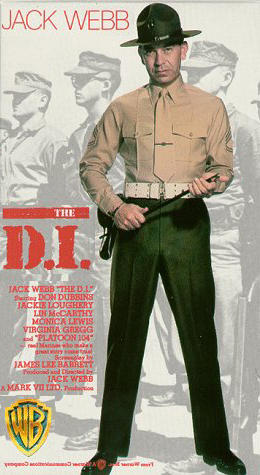
Ref:
Ribbon Creek Incident,Plt #71,Parris Island,S/Sgt McKeon,Drownings,USMC Recruit Training,Jack Webb,The D.I.,Full Metal Jacket,Old Corps,New Corps,etc.
~~~~~~~~~~~
By
R.W. "Dick" Gaines
GnySgt USMC (Ret.)
1952(Plt #437)--'72
~~~~~~~~~~~~
"Sea Stories:
The traditional means by which wisdom is passed down from one generation of Marines to the next"
-Author Unknown
~~~~~~~~~~~~~
For Information regarding Ribbon Creek, Plt #71,
S/Sgt McKeon, PISC, etc. CLICK HERE!!!!!
More Info Also On GyG's History & Traditions Site HERE!!!!!
Note: The Thread Re Plt #71, S/Sgt McKeon, Etc. is a very long thread--you may not reach all the posts via the top link (above)--you may have to go to the next link (above) and backtrack through the pages to find all the posts/responses/ remaining parts of that thread, if interested.
~~~~~~~~~~~~~~~~~~~
In order to more fully understand, and discuss, either The D.I. or Full Metal Jacket (FMJ), I think, that information regarding that well known event in 1956 that preceded the making of the movie, The D.I. is in order. Thus, I have provided information regarding The Ribbon Creek Incident (above) to include my message board posts from Marines of Platoon #71, and others with information relating to that event.
Marines have always argued among themselves as to how much tougher and better, etc. things were in "The Old Corps"! Nobody has recorded when this first began--best bet is 1775. When will it end? I would say, not as long as there is yet one Marine still standing!
And such it was and has been since one night in 1956 when something now referred to as The Ribbon Creek Incident occurred. Because of that, new arguments as to whether "boot camp" is as tough as it once was, or tougher, have gone on and on without ceasing. Many have always thought that this event of 1956 was a turning point in the way recruit training was to thereafter go for the Marine Corps, and much discussion has ensued as to what was right and wrong as a result of this. This webpage will not end such arguments, nor should it. But perhaps it can serve to bring out a few interesting points unknown to a now younger breed of Marines.
Most of us generally first learn of our Corps before we are Marines. That is when we first see a Marine movie--maybe John Wayne as Sgt John M. Stryker, in Sands of Iwo Jima; or, Retreat Hell, a movie of the first Marines to go to Korea in 1950, or maybe Battle Cry--or any one of dozens more movies about Marines. Whatever movie it was, most likely we never forgot it, nor did it leave us untouched as an individual.
Cinema serves an important social function and is a part of our American culture. The "movies," to some extent at least, contribute to our thinking and beliefs in nearly every aspect of our everyday life. True, movies are not history, nor is it facts (but it might be these things to some extent), it is entertainment, produced with profit in mind, not history or social value. Still it effectively models, shapes, and reinforces our beliefs, perception, and values. But, to what extent this occurs is debatable.
There have been several films produced the theme of which deals wholly or in part with Marine Corps recruit training and the Marine Drill Instructor (D.I.). One of the first was the 1927 "Tell It To The Marines," with Lon Chaney. And there have been many to follow through the years which at least touched upon this topic. Most likely the top two of these films, as far as authenticity goes, would be "The D.I., starring Jack Webb," and "Full Metal Jacket" (FMJ), with R. Lee Ermey." These actors--Webb and Ermey--portrayed drill instructors in each of the above two films. Marines today constantly debate which of the two movies provides the better insight into the "real" boot camp and the "real" D.I.!
Ermey is a former Marine; Webb was not a Marine, although he was a veteran of the Army Air Corps during WW II. Of the two, however, my opinion is that Webb provided the most honest and realistic portrayal of what a Marine D.I. is and should be. He appeared and acted with the bearing of a Marine. He was indeed the man for the role of T/Sgt (Gunny) Jim Moore. The setting and supporting actors, and Marines, of The D.I. were as true-to-life as could be expected.
My opinion is also based on the obvious fact that if all the vulgar language were omitted from FMJ, we would essentially have something of a silent film. The D.I., on the other hand, contains no vulgar language, yet it emerges as the best of the genre. FMJ, although entertaining, is still left with some good points, but sorely lacking when compared to The D.I.
Foul language by D.I.'s was obviously a part of Marine Corps boot camp during both eras of the two films. But it was far from the central, essential, and most critical ingredient in making Marines, then and now, and not as one might think by the direction of FMJ.
The D.I., in many ways, exemplified what the Corps was shooting for in revamping the recruit training of the mid-fifties, shortly after the tragedy of The Ribbon Creek Incident of 1956.
What then makes the difference between the two films? Webb's film was produced in 1957, the post Korean war era; and Ermey's FMJ in 1987, long after the Vietnam war ended, but focussed on the Vietnam era. Thus there was a difference of generations between the two films. There could be many other factors involved. But I think another factor is involved here that makes the difference more so than any other. That factor being the overall "image" of Jack Webb the actor.
Webb had the image of being the all-around American good guy--a Marine in "Halls of Montezuma," a cop in "Dragnet," etc. Ermey, practically had no previous image; therefore he had to be taken at face value as the D.I. that he played on the screen. He came across as foul-mouthed in the extreme, and that alone made the movie far excessive and overdone.
Yet, it was a somewhat accurate account of a D.I's lexicon of verbage, for that time. But that was also the film's major failing point. The film seemed to rely soley on that for shock effect, and provided little else. I am not personally opposed to some use of foul languge by either D.I.s or other Marines, but neither should we be obsessed with its use.
Ermey himself had, in fact, previously served as a Marine and drill instructor, but he was, for the most part an unknown actor at that time. Maybe the above factors had much to do with the way the film was perceived both then and now, maybe not.
Again, in my opinion, I believe the D.I. was the most realistic and honest film yet made regarding the experience of Marine Corps recruit training. I expect I am in the minority here, judging by responses to this that I have received across the Internet, but that is my opinion--take it or leave it.
Jack Webb has been dead these many years, and Ermey has gone on to acclaim as an actor and personality. Ermey, having reached the rank of staff sergeant while on active duty, has now been officially appointed/promoted to the "honorary" rank of gunnery sergeant by the Marine Corps, a title which he uses as a television personality, etc.
This serves to remind me that Benjamin Franklin was the recipient of one or more "honorary" doctorates. Honorary doctorates are not "earned" degrees, nor conferred on the basis of work done or academic achievements met, etc.. I have read, that Franklin thereafter went by... "Doctor Franklin." Some say he even insisted that members of Congress address him as such. Whether or not anyone ever took him seriously and complied, I don't know. Gomer Pyle (Jim Nabors), and others, BTW, have also been promoted to honorary Marine Corps ranks, but of course, Nabors was best known anyway as a comic.
I have seen Ermey's performances in several movies, and I agree that he is a pretty fair actor, maybe even better than fair, in some cases. As to his judgement in choice of certain parts/roles he accepts to play...well that's another story, I think. I read an RLE Interview (below) where he was questioned on that point, and I believe he just alluded to the amount of pay he received for that dubious part in question.
Ref
Interview...
http://www.ugo.com/channels/filmtv/features/rleeermey/
I do think, and I must honestly say, that the character he has developed on his television presentations is something less than desireable for the image of a United States Marine. In fact it may indeed be a throwback to the old pre-WW II films depicting the military sergeant as a less than super-intelligent character.
The following remarks, I find in the book, The United States Marine Corps In Books And The Performing Arts, by Richard L. Hemenez, Col USMCR (Ret.), McFarland & Company, 2001
The following, in part, regarding Ermey and FMJ...
(Page 455)...
"...Ermey, a former Marine, is also credited as a technical advisor...a heated side feud with Kubrick over Lee Ermey...labeled him 'a fucking pogue lifer'...There was some negative reaction to Ermey's DI speech...It wasn't until later that Lee Ermey went Hollywood and became R.Lee Ermey...you might think he wrote his own lines, except that much of the dialogue comes directly from Mr. Hasford's book..."
~~~~~
and, the following, in part, regarding Jack Webb and The D.I.(Page 443)...
"...In a Leatherneck magazine interview, Webb noted that a large part of his admiration for the Corps stemmed from an uncle who enlisted during WW II at age 38. His name--Frank Smith, PFC Smith was later honored as the name of Joe Friday's partner..."
I discovered the following interesting remarks and information from a few old salt Marines on the Newsletter & Archives at Sgt Grit's ....and requested Sgt Grit's permission to use them here.
There are few younger Marines today who have a very good understanding as to what occurred regarding Marine Corps Recruit training back in 1956, and thereafter. There are still Marines now out there on the Internet==old-timers--who were there and can pass some straight scoop along to you. The following is some of just that, together with some other information on this site on this topic that I have collected along the way.
~~~~~~~
The following by permission...
Sgt Grit's...
For A Full Line Of USMC Gear, Catalog, Newsletter,
Forums, Chatrooms, Etc.
Click Here!!!!!
"If We Don't Have It, Chesty Wouldn't Want It!"
~~~~~~~~~~~~~~~~
~~~~~~~~~~~~~~~~
Your last news letter had a posting by Frank N. Johnson that referred to his
Drill Instructor that played in The D.I. movie with Jack Webb. We had
an acting First Sergeant in HMM-262 back in the early 60's that also
was in that movie. He was a Gunny when we had him as our 1stSgt, but he
was also an ex DI. Gunny Louis Lazarko. He's the guy Jack Webb got into
a bar fight with named Joey. Gunny attended a reunion we had a few
years ago in New River and I made sure I brought my copy of The D.I.
with me to get autographed. We presented him with a D.I. Campaign hat
that we purchased from you.

There were two other distinguished Vietnam
Era "Brothers" in attendance at that reunion that started as 1stLt's in
our squadron. LtGen Fred "Crazy Fred" The Assassin" McCorkle who was
out guest speaker, and LtGen Mike "The Rifle" DeLong who was running
the war in the Gulf at the time. We've had many reunions and they never
grow old, I was thrilled to see our Vietnam squadron CO Col. Ural
"Bill" Shadrick at one in DC in 01.

Your constant reminders to our
"Brothers and Sisters" in the Corps to reach out and reunite with an
old buddy is something that needs to be repeated all the time. The
rewards are worth every penny you spend to mail a letter, make a phone
call, or take a plane ride, don't miss your chance! Life is too short
to miss such a rewarding opportunity. To our younger "Brothers &
Sisters" in harms way Gods Speed to your save return home.
Semper Fi,
Tim McMahon HMM-262 65-67 RVN 66-67
~~~~~~~~~~~~
~~~~~~~~~~~~
NOBODY MENTIONED THE MOVIE

Grit,
I'm surprised nobody has mentioned the movie The D.I. with
Jack Webb as being one of the best. The movie is one of the best I've
seen, made in the 50's with a real Platoon of Marines (Platoon 104
Parris Island). There's a Marine that gets into a barroom fight with
Jack Webb, Louis Lazarko that was our acting First Sergeant then a
Gunny in 1965. He was with HMM-262 in New River. In May of 2002 we had
an HMM-262 All Eras Reunion in New River, I knew the Gunny would be
there so I brought my copy of the movie with me; the Gunny autographed
it for me. He's still tough as nails! We also had the honor of having
LtGen Fred (Crazy Fred) McCorkle as our guest speaker and LtGen Mike
(The Rifle) DeLong, both former Vietnam pilots with HMM-262. It was a
great reunion, and like you always say contact your buddies and keep in
touch you'll cherish the memories.
Semper Fi,
Tim McMahon HMM-262 RVN 66-67
~~~~~~~~~~~~~~~~
~~~~~~~~~~~~~~~~
MORE ON THE MOVIE "THE D.I."

To sort of complete the comments on the famous movie of 1957 (The
D.I.) with Jack Webb, here's some more info. The book "Courtmartial at
Parris Island, the story of Ribbon Creek" written by John Stevens talks
about Platoon 351 which was training from 1 October through 31
December, 1956. That was about four months after the drowning incident
but nothing much had changed. The reason that Plt 351 (my platoon) was
mentioned is that some Hollywood movie producer had approached the
Marine Corps wanting to do a movie about the "brutality" of Marine
D.I's and the Corps wanted no parts of that plan. Shortly thereafter,
Jack Webb approached the Marine Corps with the idea of doing a movie
about a day in the life of a D.I. including the theme from a Kraft
Television Theater show about the death of a sand flea. That approach
was approved and a film production team came to MCRD PI to film
background and absorb the experience. Jack Webb noticed and admired the
drill cadence of one of my Junior D.I's (Cpl E-3 John R. Brown) and
pulled him out to Hollywood to act in the film and be one of the
technical advisors. Brown played a Sergeant O'Neill in the film. You
may recall that he was the one who braced the fire watch and had to
listen to him spit out his General Orders and then pulled liberty with
Webb at the Cotton Club. To this day, no one can find out where John R.
Brown went or what happened to him. Rumor is he met and married a
starlet while in Hollywood. He was a 'character' to say the least! The
other 351 drill instructors were Sgt's (E-4) Eugene Alvarez, J.R.
Strickland and H.W. Jones.

I'm pleased to say that I still meet
and communicate with my senior D.I. after 49 years. Gene Alvarez is an
accomplished author, PHd and a retired professor living in Centerville,
Georgia. At 75 years of age, he's remarkable in all aspects and still
travels back to Parris Island to join with other D.I's including the WW
II gents. Platoon 351 Marines can contact me at jrhd@aolcom if they'd
like.
Semper Fidelis
Joe Featherston
Major, USMC, Ret.
~~~~~~~~~~~~~
~~~~~~~~~~~~~
VETERANS OF THE PACIFIC

From a book titled Court-Martial at Parris Island, by by John C. Stevens,
III, that recounts the full story of the recruits lost in Ribbon Creek
in April, 1956 comes the following excerpt from pg 156: "Richard
Hudson, a 1948 Parris Island recruit and later a Drill Instructor in
the mid-1950's, remembers, During the time I was in boot camp there
were incidents of "thumping" ....A lot of DIs were veterans of the
Pacific and seemed to be an unforgiving group. I received a hard kick
in the butt when I moved my foot a couple of inches after the platoon
was called to a halt.

One senior DI had a routine that he felt
was good for instilling discipline. He would place a very young looking
DI in his platoon with new dungarees (utilities), hat pulled down to
his ears, and blend him in with the others; this would be in the first
couple of days before they knew each other. Once on the drill field the
"shill" would start screwing up. The DI would then go into his act of
beating and screaming at the individual causing him so much grief.
After a period of time the PLANT would start yelling that he could take
no more, "No, I can't take it. I Can't take it," drop his rifle and
start running across the drill field. In the meantime, the DI had
picked up his rifle and was yelling, "Get back here you
son-of-a-bitch." The PLANT, yelling, "No Sir," continues to run,
whereupon the DI chambered a round (blank, of course) in the rifle and
fired.

The 'planted' recruit would scream and fall. The DI would
then turn toward a couple of other DIs awaiting their cue and (say,)
"Carry that worthless bastard off of my drill field." O.K. Sarge, we'll
take care of it."

The plant was carried off the field, and the
awestruck recruits' terror and fear of their drill instructor were
instantly elevated to a new plateau.The routine continued with other
platoons in their formative stages until an officer happened to spot
the charade and, suppressing his mirth, suggested that it not be
repeated.

Personal note: I was in Platoon 351 (September, 1956)
in 1st Battalion which served as the role model for the movie starring
Jack Webb called The D.I. In fact, the cadence of one of my junior DIs
named Cpl (E-3) John R. Brown caused him to be selected by Jack Webb to
play a role in the movie as Sgt O'Neill and to be a technical advisor
in the movie. Despite the fallout from the court-martial, there was no
appreciable transformation by our DIs to a more kind and gentle mode
with us.

Semper Fidelis,
Joe Featherston
~~~~~~~~~~~~~~
~~~~~~~~~~~~~~
BACKGROUND TO "THE DI" MOVIE

In response to both Kent Mitchell, (Corporal, 55-60) Newsletter of August
7th and GySgt Ted "Shotgun" Baker Newsletter of August 21st, maybe I
can add some clarification to their accounts of the making of The DI
with Jack Webb and a number of active duty Marines in late 1956. I was
a recruit in Platoon 351, 1st RTB at Parris Island from 1October56
through December 31, 1956. Among others, my DI's were (then) Sgt E-4
Eugene Alvarez as SDI and Sgt's Strickland and Jones as JDI's, until
Cpl E-3 John R. Brown joined Plt 351 at the rifle range, probably in
early November. I recall it pretty well because a slightly (sic)
inebriated Cpl Brown summoned the fire watch (me) in the middle of the
night and "gut-checked" me before turning on his heels and walking off.
To say that he was unusual would be a grievous understatement. To know
him was to never, ever, forget him. As Gy Baker said, we probably
picked up both Sgt Jones and Cpl Brown from platoon 253 when they
"outposted" at the end of October. You're right Gunny, Brown supposedly
went "Hollywood" appeared in the DI as Sgt O'Neal, met and married a
French starlet while there.and sometime later went off the radar. No
one with the DI Association can turn up any further news.

By the way, Platoon 351 also had a recruit, named Vincent Sheehan, called
"Shotgun" because his rapid-fire string looked about like that. He was
made to grab a GI can lid in his left hand as a shield, fix bayonets
and charge the targets to prove that was the only way he was going to
kill anything. Another Brown legacy! Agreeing with Kent Mitchell, Brown
was, indeed, a mean little s..t! I can see him taking immediate action
during the movie filming. By the way folks, our SDI (Sgt Alvarez) a
retired PhD from the collegiate system of Georgia will be at MCRD PI
and MCAS Beaufort 3 & 4 October for a book signing with John
Stevens (Court Martial at Parris Island, The Ribbon Creek Incident).
The event is the reunion of WWII DI's. Wouldn't miss this one for the
world! How would you like to see you SDI after nearly 47 years.? Joe
Featherston (1647380), rifle number 441380 (doesn't everybody remember
their rifle number?)
Major, USMC, Ret.
~~~~~~~~~~~~~
~~~~~~~~~~~~~
IN CONCLUSION:
And so, what can be answered to the age-old questions as to Old Corps, New Corps? Which was/is tougher?, etc. These questions still go on and on, never really answered to the satisfaction of all.
In my opinion, the Corps is as tough as it ever was. Individual Marines, however, have changed, most notably in their attitudes.
I have seen articles these last few years where some of today's generals have publicly stated that today's Marines are superior to the Old Corps, etc. That today's recruits are bigger, stronger, better educated, better trained and equipped, etc. And I have seen young Marines themselves pick up on this theme and run with it. And, the old salts-- though few really old salts seem to be regulars on the WWW--have generally conceded the above points, some of which may be true. Often cited in response, is the "Old Breed, New Breed, Only The Marine Breed," quote (paraphrased here) of General "Chesty" Puller. It was back in 1950 that the general made that remark.
My only contact with today's Marines is via the Internet, i.e., Marines who post/respond on Marines' message boards, therefore my opinion is limited to such direct observation.
Unlike older Marines from the '50s and prior, today's "boots" are unwilling to take a backseat in any way to those who came before them. They feel the need to voice their opinions on everything, and to judge the past by their own standards, and demand that they be respected by the older Marines. They claim they also "respect" the old-timers, but actually I can see that many consider talk of the Old Corps as an affront to their own status. (On the other hand, like everything else, it could be that only the bigmouths are heard from.)
I never witnessed anything like this directed toward the older generations of Marines back in the '50s and '60s from regular Marines! We, of the older Corps, indeed come from a far different process of socialization prior to our having become Marines.
That is the major change I see, from my observations of young Marines--an unwillingness to defer to those who came before them, unwilling to be a silent majority as others were in the old days, etc.
So it's not really a case of which is better, the new or the old--such would now be like comparing apples and oranges, I think. Marines can and still do what is expected of one who has claimed the title. Yes, I said "claimed." (Even that has now been effectively changed to "earned," along with the demise of much Naval terminology once a part of every Marine's lexicon.)
Such Old Corps/New Corps questions were at one time valid--much direct comparison, despite obvious differences, could be made between the pre--WW II Marines and those of WW II and Korea, for instance. But America itself has changed dramatically since those days till now. And obviously, the available resources of Americans we draw our new Marines from has changed a great deal. In fact, it has changed so much that I do not believe that a direct comparison can be made any longer between the old and the new individual Marines. Yes, boot camp tears a recruit down while building a new Marine, but there is a very basic difference between the recruit of 1950 and now.
Yet, the Corps is still here as always, a Marine Corps no better or lesser than the Old Corps, but different, in many ways, than it was in 1950.
Without doubt, General Puller's remarks were indeed quite true back then. The difference between today's new Marines and the Old Corps is not principally that the Corps has changed all that much, but that today's youth doesn't come from the same "America" that we came from so many years ago now. Thus, the basic change in attitudes. So these ageless questions regarding Old Corps, New Corps? Which was tougher?, etc., not only cannot be answered--these cannot even be questions any longer.! But don't expect these questions to go away any time soon. Marines have never allowed facts to get in the way of their traditions--and arguing about The Old Corps is traditional for Marines.
Semper FidelisDick Gaines
~~~~~~~~~~
This is...
Gunny G's...
GLOBE and ANCHOR
Marines Sites & Forums
By R.W. "Dick" Gaines
Gny Sgt USMC (Ret.)
1952-'72
Semper Fidelis
~~~~~~~~~~
Note:
GyG's G&A Sites & Forums is an informational site and not for profit. Copyrighted material provided soley for education, study, research, and discussion, etc. Full credit to source shown when available.
~~~~~
Friday, May 20, 2005
About "The Wind And The Lion"
By R.W. Gaines, GnySgt USMC (Ret.)
November 21, 2004
I recently again viewed the film The Wind And The Lion, 1975, (Sean Connery, Candice Bergen), and I noticed that although the story was set in the year 1904, the Marine Corps battle color shown was the one w/the scarlet background, not the battle color w/the blue background as would be correct for that time. As you all know, the background color for the USMC battle color was changed from blue to scarlet in 1925, although it did not become completely effective till 1939. Also noticed the same error in another film, Shores Of Tripoli (John Payne, Randolph Scott). in this case, the blue battle color vice the scarlet was shown on the occasion of the beginning of WW II and Pearl Harbor. Decided to check into the events of the The Wind and The Lion plot to see whether or not the story line of this film had any basis in fact, and perhaps discover what else they had gotten wrong...
Here's what I found.
Dick Gaines
~~~~~
"May 30, 1904 — The bandit chieftain, Raisouli, kidnapped a naturalized American citizen, Ion Perdicaris, in Morocco. President Roosevelt informed the Moroccan government that we wanted "Perdicaris alive or Raisouli dead" and landed Captain J.T. Myers's Marine detachment from the cruiser USS Brooklyn (ACR 3) at Tangier. Shortly thereafter, Raisouli released Pedicaris."
Ref
HERE!!!!!
Note:
The above incident involving Pedicaris and Raisouli is not specifically mentioned in "Who's Who In The Marine Corps" (below), however it does indicate Capt Myers's Marine Detachment on the USS Brooklyn during that period.
-Dick Gaines
1904: 'Pedicaris Alive Or Raisuli Dead'
HERE!!!!!
"Long before there were suicide bombers, Osama bin Laden or chants of "Death to the Great Satan," a Trenton man named Ion Perdicaris became the 20th century's first American victim of Middle Eastern terrorism.
It all happened in 1904, when the 64-year-old Perdicaris and his stepson found themselves taken hostage from their villa in Tangier, Morocco by a scruffy band of rifle-toting Berber tribesmen on horseback.
The bandits' chieftain was flamboyant, black-bearded Mulai Ahmed er Raisuli, and he wanted to extort a heavy ransom from the Sultan of Morocco -- not to mention embarrass the sovereign by showing his powerlessness to protect foreign citizens.
This was more than a simple kidnapping in a distant land. For President Theodore Roosevelt, it was an opportunity to start waving his "big stick," sending battleships steaming toward the African coast to ensure Perdicaris' safe release.
It also gave Roosevelt the chance to issue one of his most blood-curdling proclamations, a statement that helped ensure his re-election while sending Americans wild with joy:
"Perdicaris alive or Raisuli dead!"
Still, for all the bluster contained in that ringing phrase, Roosevelt concealed a secret that Perdicaris wasn't even an American citizen.
The strange saga of Ion Hanford Perdicaris began in 1840, when he was born an American citizen in Greece, son of Gregory Perdicaris.
The elder Perdicaris was an Athenian who had emigrated to the United States, married a wealthy young woman from South Carolina and headed back to his native land to serve as American consul. When Ion was 6, the Perdicarises moved back to America and settled in the industrial boom town of Trenton.
There, Gregory Perdicaris built a mansion at East State Street and North Clinton Avenue, published a short-lived newspaper, and turned his wife's wealth into a fortune by creating the Trenton Gas Light company
Young Ion Perdicaris grew up with few cares in his luxurious life. He attended prestigious Trenton Academy, took on a dilettantish love of art and literature and wrote a verse play, "Tent Life," around one of his paintings. It bombed.
In 1862, in the middle of the Civil War, Ion Perdicaris secretly went back to Greece to forswear his American citizenship and be naturalized a Greek citizen. He made this rash move to prevent the Confederacy from confiscating his mother's huge estate there. But few even in his family knew about it.
On a later trip abroad, Ion Perdicaris fell in love with the warm, breezy climes of Tangier and built his own house there, calling it Place of Nightingales and filling it with a menagerie of dogs, monkeys and cranes.
Late in life, he married an English actress and became a fixture in the large diplomatic community in Morocco, who also included another Trentonian -- the American consul, Samuel R. Gummere.
Morocco was then the only independent country try in North Africa. But the sultan, Mulia Abdul-Aziz, was a weak puppet who played with his collection of grand pianos while rival bands of warlords tore his country apart and the European powers jockeyed for influence.
In this chaotic environment, western diplomats banded together and lived apart from the natives -- a situation that was later described by Gummere's niece, Mathilde Bedford.
"[Perdicaris'] villa, like most of the diplomats' homes, was outside the city walls," she wrote in 1964. "Morocco, at that time, had no roads, not even a carriage or wheel of any kind, so we went everywhere, even at night to dinners and dances, on horses and donkeys, and if it rained, I was carried in a sedan chair on the shoulders of four Jews. No Moor would carry 'a dog of a Christian,' so the Jews kindly helped us out."
This carefree existence was shattered the evening of May 18, 1904.
Perdicaris and his stepson, Cromwell Varley, were dining on their terrace when they heard shrieks and barked commands coming from their servants' quarters. As they ran to the scene of the commotion a gang of Berbers brazenly grabbed them, clubbed them with gun stocks and bound their arms.
A housekeeper shouted "Help!" into the telephone before the kidnappers clubbed her too, cut the wire and ordered the captive duo out of the house. Guns to their backs, curved daggers at their throats, they were ordered onto horses and driven off in a wild storm of dust.
After a daylong ride Perdicaris and Varley reached a tent deep in the desert. There, they rested on sheepskins, ate a dinner of couscous and came face to face with Raisuli.
Raisuli was a notorious brigand known as "Last of the Barbary Pirates." But for his admirers, he was a Robin Hood in white robes doing battle with a corrupt sultan.
The raid on Perdicaris' home it turned out, was only his latest and boldest power play against
that sultan. Raisuli issued the hated ruler a list of exorbitant demands for the hostages' release: $70,000 in gold, safe-conduct for all his tribesmen and, most outrageous of all, recognition as the sultan's bashaw, or governor, over two districts around Tangier.
How did Perdicaris, this heir to privilege, react upon meeting the desert warrior Raisuli? Incredibly, the two hit it off.
"I go so far as to say that I do not regret having been his prisoner for some time," Perdicaris would later write. "He is not a bandit, not a murderer, but a patriot forced into acts of brigandage to save his native soil and his people from the yoke of tyranny."
Roosevelt did not see it that way. He was, after all, the swinger of the big stick, the trust-buster, the man who, months earlier, engineered a Latin American revolution to dig the Panama Canal. And he wasn't going to let an obscure tribe of Berbers get away with kidnapping an American.
"Preposterous," said Roosevelt's Secretary of State, John Hay, responding to the ransom demands.
Seven battleships from the Atlantic fleet were dispatched to the Moroccan coast. But even with the public and press crying for blood, Roosevelt knew he couldn't send marines on a rescue mission on unfamiliar soil. And on June 1, he was faced with further trouble -- a confidential message from the U.S. embassy in Greece sending word that Perdicaris was not, as widely believed, an American citizen.
So the United States quietly enlisted Britain and France to put pressure on the tottering sultan and accept Raisuli's demands.
This the sultan agreed to do, on June 21. But to cover his tracks, Hay -- no doubt with some prodding from the hot-blooded commander in chief -- issued a stirring telegram to Gummere in Tangier.
"This government wants Perdicaris alive or Raisuli dead," went the telegram.
Read for the first time at the Republican national convention, the challenge turned a dull proceeding into a frenzy of all-American excitement.
A few days later, Perdicaris was free and safe, Raisuli was $70,000 richer and Roosevelt was renominated for another term, propelling him to easily win a second term in the November elections.
Forgotten in the excitement was the fact the U.S. government had, essentially, given in to all the kidnapper's demands. And the public was never told Perdicaris' secret that he wasn't even a citizen.
"It is a bad business," Hay wrote. “We must keep it excessively confidential."
And confidential it stayed. Not until 1933, long after all the players in the Perdicaris drama had died, would a historian uncover the truth in official documents.
Into his 70s, Perdicaris came back to Trenton from time to time and visited his substantial real estate holdings. Perdicaris Place, off West State Street, is named after him and his father. He died a wealthy figure in London in 1925.
Years later, the Perdicaris story would be rediscovered by Hollywood in a 1975 movie, "The Wind and the Lion." Sean Connery played Raisuli, but the scriptwriters apparently thought the balding, bearded Perdicaris wasn't a romantic enough character as a man.
So the screenwriters turned "Ion" Perdicaris into "Eden" Perdicaris and cast Candice Bergen in the part.
Back to The Capital Century home page
1904: 'Perdicaris alive
or Raisuli dead!'
By JON BLACKWELL / The Trentonian"
MORE ON CAPT J.T. MYERS IN CHINA
HERE!!!!!
AND, FROM HQMC HISTORY & MUSEUMS
HERE!!!!!
"UNITED STATES MARINE CORPS
HISTORY AND MUSEUMS DIVISION
Who's Who in Marine Corps History
LIEUTENANT GENERAL
JOHN T. MYERS, USMC
(DECEASED)
Lieutenant General John Twiggs Myers, who earned a permanent place in Marine Corps history as commander of the American Legation Guard at Peking, China, during the Boxer Rebellion, died on 17 April 1952, at his home in Coconut Grove, Florida. A veteran of 40 years as a Marine officer, he retired from the Corps in 1935, after a career that included the Spanish-American War; the Philippine Insurrection; World War I service as Fleet Marine Officer of the U.S. Atlantic Fleet; expeditionary service in the Haitian, Santo Domingan, Cuban and Mexican campaigns; and a total of nearly ten years of sea duty.
General Myers was a great grandson of General John Twiggs, a Revolutionary War hero, and his father, Abraham C. Myers, was a West Point graduate who fought in the Seminole and Mexican Wars and later served as Quartermaster General of the Confederate Army. At the end of the Civil War, Abraham C. Myers took his family to Weisbaden, Germany, where John was born 29 January 1871. The family returned to this country in 1876, and young John attended public schools in Washington, D.C., and Wilkinson's Preparatory School at Annapolis, Maryland, before entering the U.S. Naval Academy in September 1887. Graduating in 1892, he continued to hold the rank of naval cadet until he was appointed an assistant engineer in August, 1894. He was transferred from the Navy to the Marine Corps on 6 March 1895, and accepted appointment as a second lieutenant the following day.
In May 1896, after completing the course at the School of Application in Washington, D.C., and studying ordnance at the Naval Gun Factory in Washington, the general was ordered to the Naval War College at Newport, Rhode Island, where he completed his studies that September. He then served briefly at the Marine Barracks, Boston, Massachusetts, before joining the barracks detachment at Mare Island, California, in November of the same year. He left Mare Island 7 May 1898, to join the Marine detachment aboard the USS Charleston, which sailed a few days later to convoy six troop ships to the Philippines. Enroute, the Charleston stopped at Guam, and on 21 June General Myers (as a second lieutenant) accompanied the captain of the Charleston ashore as head of a landing party of 16 sailors and 30 Marines, which disarmed and made prisoners of the Spanish garrison on the island.
After that, the convoy moved to the Philippines, where the general (by then a captain) was transferred to the USS Baltimore in July, 1899. While attached to that ship during the Philippine Insurrection, he commanded a landing expedition which went ashore under fire to capture and destroy an Insurrect gun at Port Olongapo on 23 September and made another landing under fire at Bacoor on 2 October. He also commanded a 100-man landing force which took over the naval station at Subic Bay on 10 December 1899, the day after it was captured by the Army. On 18 April 1900, the general was transferred from the Baltimore to the USS Oregon, and on 24 May of the same year he was detached to the USS Newark. Meanwhile, a wave of violence, led by an athletic society known as the Boxers, was erupting in China, where a number of foreigners were killed or subjected to gross indignities. The Imperial Government, sympathizing with the movement, did little to stop it, and the foreigners in Peking were soon forced to the take refuge in the legations there. On 28 May E.H. Conger, the American Minister at Peking, telegraphed the Commander-in-Chief of the U.S. Asiatic Squadron at Taku to send an armed force for the protection of the legation. The following day Myers set out for that city as commander of a force of 48 Marines and three sailors from the Oregon and Brooklyn. Along with detachments of British, Russian, French, Italian and Japanese Marines, they reached Peking at 11 o'clock on the night of 31 May just before the city was encircled.
On 24 June serious fighting broke out on the walls of the legations as hordes of Boxers, armed with swords, spears, clubs, stones, noise-makers and several three-inch field pieces, attempted to overwhelm the handful of foreign troops. A German detachment repulsed the first attack and the Marines hurled back a second, causing heavy losses amongst the boxers. After that the Chinese changed their tactics and began building a tower on the ancient wall above the American Legation, only about 25 feet from the Marines' position. Since this would have allowed the Boxers to fire at will on the troops and civilians below, Minister Conger reported this danger to the British Minister, Sir Claude M. MacDonald, who had been picked by common consent as commander of the international defense. He agreed to the American's suggestion that an attack should be made on the tower and the Chinese barricade behind it.
Myers was picked to head the attacking force, composed of himself and 14 other American Marines, 16 Russian and 25 British Marines. His plan was to have the Russians hit the barricade from the North, while the American and British Marines were to assault the tower, then fight their way to the barricade, along a sort of trench which ran from it to the tower. At a signal from Myers, the attack began about three o'clock on the morning of 3 July.
The Anglo-American force, with Myers in the lead, found the tower empty when they reached it, then proceeded along the trench, where they ran into bitter, hand-to-hand fighting. Myers was badly wounded by a spear during the action in the trench, but the attack continued until the barricade was in friendly hands. In addition to Myers, the allied losses included two U.S. Marines and one Russian killed and two Russian and three British Marines severely wounded. Estimates of enemy losses ran as high as 50 dead. The British Minister called this action" one of the most successful operations of the siege, as it rendered our position on the wall, which had been precarious, comparatively strong." Largely because of it, the disheartened Boxers agreed to an uneasy truce on 16 July.
Myers was brevetted major and advanced four numbers in rank for his bravery, and in President McKinley's message to Congress in February 1901, he mentioned the captain by name. British appreciation was demonstrated a few years afterward, when a monument to the Royal Marines was erected outside the Admiralty in London, facing Buckingham Palace. One of the bas-reliefs on that memorial shows Myers leading the British Marines in the attack on the Boxers.
A relief column finally reached Peking on 14 August and the following month General Myers, convalescing from typhoid fever and the spear wound in his leg, was ordered to the U.S. Naval Hospital at Yokohama, Japan. From there he was a transferred to the Naval Hospital at Mare Island, where he was under treatment until March 1901. After that, except for a short time on Samoa as judge advocate of a general court martial, he remained at Mare Island until December 1902, when he took command of the Marine Barracks at Bremerton, Washington.
The general left Bremerton in May 1903, arriving on the East Coast the following month to take command of the Marine Detachment aboard the USS Brooklyn. He held that command until April 1905, then served at the Naval War College in Newport, until he took command of the School for Non-Commissioned Officers at the Marine Barracks, Washington, D.C., in October of the same year. In May 1906, he took command of the barracks detachment there, serving in that assignment until he left Washington that July. The following month he returned to the Philippines, commanding the 1st Marine Regiment there until January 1907, when he was assigned to the USS West Virginia as commander of its detachment and Fleet Marine Officer of the Asiatic Fleet.
In May 1909, General Myers was transferred from the West Virginia to the USS Tennessee for duty as Fleet Marine Officer, Pacific Fleet, but the following month, because of a serious intestinal infection, he was ordered once more to the Naval Hospital at Mare Island. He was hospitalized or on sick leave until January, 1911, when he entered the Army Field Officers Course at Fort Leavenworth, Kansas.
Completing that course in March 1911, the general was stationed briefly at the Marine Barracks, Philadelphia, Pennsylvania, and on recruiting duty in Boston before he entered the Army War College in Washington that August. Graduating in July 1912, he took command of the Marine Barracks at the Washington Navy Yard the following month. His service there was interrupted by expeditionary duty as a battalion commander with the 2nd Provisional Marine Regiment off Santo Domingo in 1912 and with the 2nd Regiment, 2nd Provisional Marine Brigade at Guantanamo Bay, Cuba, the following year. He left Washington in April 1913, to serve for the next year as commander of the Marine Barracks, Honolulu, Territory of Hawaii.
In April, 1914, General Myers returned from that assignment to take command of the 1st Battalion, 4th Marine Regiment, at Mare Island, sailing with that unit for the west coast of Mexico later the same month. The regiment remained aboard the battleship South Dakota in Mexican waters during a period of strained relations between the United States and that country, but did not land. It returned to this country in July and General Myers, still commanding its 1st Battalion, was stationed with it at San Diego, California, until February 1915, when that unit was assigned duty at the Panama Pacific International Exposition in San Francisco, California. The battalion was ordered to sea duty with the Pacific Fleet in November 1915, and in February of the following year, after service on the USS San Diego and USS Buffalo, it returned to San Diego.
The general (by then a lieutenant colonel) was detached from the 1st Battalion, 4th Marines, in June 1916, when he was assigned to the Atlantic Fleet as Fleet Marine Officer and counter-intelligence officer on the staff of its commander. Serving in those capacities for most of World War I, he was stationed aboard the USS Wyoming until October 1916, and on the USS Pennsylvania from then until August 1918, when he took command of the Marine Barracks at Parris Island, South Carolina. He remained there until the war ended that November.
In January 1919, after a short time at Quantico, Virginia, General Myers assumed command of the Marine Barracks at Pearl Harbor, where he was stationed until August 1921.
He was then named Adjutant and Inspector of the Department of the Pacific, with headquarters at San Francisco, California, serving in that assignment until May 1924. After that, he commanded the Marine Corps Base at San Diego from June of that year to November 1925 when he sailed for Haiti to take command of the 1st Marine Brigade.
The general returned from that tour of expeditionary duty in January 1928, and the following month, reported to Marine Corps Headquarters in Washington. There, after serving on various boards, he was named Assistant to the Major General Commandant in April 1930, serving in that capacity until February 1933. A month later he returned to San Francisco, where he was Commanding General, Department of the Pacific and Western Recruiting Area, until he was placed on the retired list, 1 February 1935, at the statutory retirement age of 64. A major general when he retired, he was promoted to lieutenant general on the retired list in 1942, when the law was passed authorizing such promotions for officers who had been specially commended in combat.
General Myers' medals and decorations included the Marine Corps Brevet Meal, Purple Heart, Spanish Campaign Medal, Philippine Campaign Medal, China Campaign Medal; Marine Corps Expeditionary Medal, Mexican Service Medal and the World War I Victory Medal with Armed Guard clasp.
The general was survived by his wife, the former Alice G. Cutts, of Mare Island, whom he married in 1898. They had no children. He is buried in Arlington National Cemetery."
Ref
Who's Who in Marine Corps History

November 21, 2004
I recently again viewed the film The Wind And The Lion, 1975, (Sean Connery, Candice Bergen), and I noticed that although the story was set in the year 1904, the Marine Corps battle color shown was the one w/the scarlet background, not the battle color w/the blue background as would be correct for that time. As you all know, the background color for the USMC battle color was changed from blue to scarlet in 1925, although it did not become completely effective till 1939. Also noticed the same error in another film, Shores Of Tripoli (John Payne, Randolph Scott). in this case, the blue battle color vice the scarlet was shown on the occasion of the beginning of WW II and Pearl Harbor. Decided to check into the events of the The Wind and The Lion plot to see whether or not the story line of this film had any basis in fact, and perhaps discover what else they had gotten wrong...
Here's what I found.
Dick Gaines
~~~~~
"May 30, 1904 — The bandit chieftain, Raisouli, kidnapped a naturalized American citizen, Ion Perdicaris, in Morocco. President Roosevelt informed the Moroccan government that we wanted "Perdicaris alive or Raisouli dead" and landed Captain J.T. Myers's Marine detachment from the cruiser USS Brooklyn (ACR 3) at Tangier. Shortly thereafter, Raisouli released Pedicaris."
Ref
HERE!!!!!
Note:
The above incident involving Pedicaris and Raisouli is not specifically mentioned in "Who's Who In The Marine Corps" (below), however it does indicate Capt Myers's Marine Detachment on the USS Brooklyn during that period.
-Dick Gaines
1904: 'Pedicaris Alive Or Raisuli Dead'
HERE!!!!!
"Long before there were suicide bombers, Osama bin Laden or chants of "Death to the Great Satan," a Trenton man named Ion Perdicaris became the 20th century's first American victim of Middle Eastern terrorism.
It all happened in 1904, when the 64-year-old Perdicaris and his stepson found themselves taken hostage from their villa in Tangier, Morocco by a scruffy band of rifle-toting Berber tribesmen on horseback.
The bandits' chieftain was flamboyant, black-bearded Mulai Ahmed er Raisuli, and he wanted to extort a heavy ransom from the Sultan of Morocco -- not to mention embarrass the sovereign by showing his powerlessness to protect foreign citizens.
This was more than a simple kidnapping in a distant land. For President Theodore Roosevelt, it was an opportunity to start waving his "big stick," sending battleships steaming toward the African coast to ensure Perdicaris' safe release.
It also gave Roosevelt the chance to issue one of his most blood-curdling proclamations, a statement that helped ensure his re-election while sending Americans wild with joy:
"Perdicaris alive or Raisuli dead!"
Still, for all the bluster contained in that ringing phrase, Roosevelt concealed a secret that Perdicaris wasn't even an American citizen.
The strange saga of Ion Hanford Perdicaris began in 1840, when he was born an American citizen in Greece, son of Gregory Perdicaris.
The elder Perdicaris was an Athenian who had emigrated to the United States, married a wealthy young woman from South Carolina and headed back to his native land to serve as American consul. When Ion was 6, the Perdicarises moved back to America and settled in the industrial boom town of Trenton.
There, Gregory Perdicaris built a mansion at East State Street and North Clinton Avenue, published a short-lived newspaper, and turned his wife's wealth into a fortune by creating the Trenton Gas Light company
Young Ion Perdicaris grew up with few cares in his luxurious life. He attended prestigious Trenton Academy, took on a dilettantish love of art and literature and wrote a verse play, "Tent Life," around one of his paintings. It bombed.
In 1862, in the middle of the Civil War, Ion Perdicaris secretly went back to Greece to forswear his American citizenship and be naturalized a Greek citizen. He made this rash move to prevent the Confederacy from confiscating his mother's huge estate there. But few even in his family knew about it.
On a later trip abroad, Ion Perdicaris fell in love with the warm, breezy climes of Tangier and built his own house there, calling it Place of Nightingales and filling it with a menagerie of dogs, monkeys and cranes.
Late in life, he married an English actress and became a fixture in the large diplomatic community in Morocco, who also included another Trentonian -- the American consul, Samuel R. Gummere.
Morocco was then the only independent country try in North Africa. But the sultan, Mulia Abdul-Aziz, was a weak puppet who played with his collection of grand pianos while rival bands of warlords tore his country apart and the European powers jockeyed for influence.
In this chaotic environment, western diplomats banded together and lived apart from the natives -- a situation that was later described by Gummere's niece, Mathilde Bedford.
"[Perdicaris'] villa, like most of the diplomats' homes, was outside the city walls," she wrote in 1964. "Morocco, at that time, had no roads, not even a carriage or wheel of any kind, so we went everywhere, even at night to dinners and dances, on horses and donkeys, and if it rained, I was carried in a sedan chair on the shoulders of four Jews. No Moor would carry 'a dog of a Christian,' so the Jews kindly helped us out."
This carefree existence was shattered the evening of May 18, 1904.
Perdicaris and his stepson, Cromwell Varley, were dining on their terrace when they heard shrieks and barked commands coming from their servants' quarters. As they ran to the scene of the commotion a gang of Berbers brazenly grabbed them, clubbed them with gun stocks and bound their arms.
A housekeeper shouted "Help!" into the telephone before the kidnappers clubbed her too, cut the wire and ordered the captive duo out of the house. Guns to their backs, curved daggers at their throats, they were ordered onto horses and driven off in a wild storm of dust.
After a daylong ride Perdicaris and Varley reached a tent deep in the desert. There, they rested on sheepskins, ate a dinner of couscous and came face to face with Raisuli.
Raisuli was a notorious brigand known as "Last of the Barbary Pirates." But for his admirers, he was a Robin Hood in white robes doing battle with a corrupt sultan.
The raid on Perdicaris' home it turned out, was only his latest and boldest power play against
that sultan. Raisuli issued the hated ruler a list of exorbitant demands for the hostages' release: $70,000 in gold, safe-conduct for all his tribesmen and, most outrageous of all, recognition as the sultan's bashaw, or governor, over two districts around Tangier.
How did Perdicaris, this heir to privilege, react upon meeting the desert warrior Raisuli? Incredibly, the two hit it off.
"I go so far as to say that I do not regret having been his prisoner for some time," Perdicaris would later write. "He is not a bandit, not a murderer, but a patriot forced into acts of brigandage to save his native soil and his people from the yoke of tyranny."
Roosevelt did not see it that way. He was, after all, the swinger of the big stick, the trust-buster, the man who, months earlier, engineered a Latin American revolution to dig the Panama Canal. And he wasn't going to let an obscure tribe of Berbers get away with kidnapping an American.
"Preposterous," said Roosevelt's Secretary of State, John Hay, responding to the ransom demands.
Seven battleships from the Atlantic fleet were dispatched to the Moroccan coast. But even with the public and press crying for blood, Roosevelt knew he couldn't send marines on a rescue mission on unfamiliar soil. And on June 1, he was faced with further trouble -- a confidential message from the U.S. embassy in Greece sending word that Perdicaris was not, as widely believed, an American citizen.
So the United States quietly enlisted Britain and France to put pressure on the tottering sultan and accept Raisuli's demands.
This the sultan agreed to do, on June 21. But to cover his tracks, Hay -- no doubt with some prodding from the hot-blooded commander in chief -- issued a stirring telegram to Gummere in Tangier.
"This government wants Perdicaris alive or Raisuli dead," went the telegram.
Read for the first time at the Republican national convention, the challenge turned a dull proceeding into a frenzy of all-American excitement.
A few days later, Perdicaris was free and safe, Raisuli was $70,000 richer and Roosevelt was renominated for another term, propelling him to easily win a second term in the November elections.
Forgotten in the excitement was the fact the U.S. government had, essentially, given in to all the kidnapper's demands. And the public was never told Perdicaris' secret that he wasn't even a citizen.
"It is a bad business," Hay wrote. “We must keep it excessively confidential."
And confidential it stayed. Not until 1933, long after all the players in the Perdicaris drama had died, would a historian uncover the truth in official documents.
Into his 70s, Perdicaris came back to Trenton from time to time and visited his substantial real estate holdings. Perdicaris Place, off West State Street, is named after him and his father. He died a wealthy figure in London in 1925.
Years later, the Perdicaris story would be rediscovered by Hollywood in a 1975 movie, "The Wind and the Lion." Sean Connery played Raisuli, but the scriptwriters apparently thought the balding, bearded Perdicaris wasn't a romantic enough character as a man.
So the screenwriters turned "Ion" Perdicaris into "Eden" Perdicaris and cast Candice Bergen in the part.
Back to The Capital Century home page
1904: 'Perdicaris alive
or Raisuli dead!'
By JON BLACKWELL / The Trentonian"
MORE ON CAPT J.T. MYERS IN CHINA
HERE!!!!!
AND, FROM HQMC HISTORY & MUSEUMS
HERE!!!!!
"UNITED STATES MARINE CORPS
HISTORY AND MUSEUMS DIVISION
Who's Who in Marine Corps History
LIEUTENANT GENERAL
JOHN T. MYERS, USMC
(DECEASED)
Lieutenant General John Twiggs Myers, who earned a permanent place in Marine Corps history as commander of the American Legation Guard at Peking, China, during the Boxer Rebellion, died on 17 April 1952, at his home in Coconut Grove, Florida. A veteran of 40 years as a Marine officer, he retired from the Corps in 1935, after a career that included the Spanish-American War; the Philippine Insurrection; World War I service as Fleet Marine Officer of the U.S. Atlantic Fleet; expeditionary service in the Haitian, Santo Domingan, Cuban and Mexican campaigns; and a total of nearly ten years of sea duty.
General Myers was a great grandson of General John Twiggs, a Revolutionary War hero, and his father, Abraham C. Myers, was a West Point graduate who fought in the Seminole and Mexican Wars and later served as Quartermaster General of the Confederate Army. At the end of the Civil War, Abraham C. Myers took his family to Weisbaden, Germany, where John was born 29 January 1871. The family returned to this country in 1876, and young John attended public schools in Washington, D.C., and Wilkinson's Preparatory School at Annapolis, Maryland, before entering the U.S. Naval Academy in September 1887. Graduating in 1892, he continued to hold the rank of naval cadet until he was appointed an assistant engineer in August, 1894. He was transferred from the Navy to the Marine Corps on 6 March 1895, and accepted appointment as a second lieutenant the following day.
In May 1896, after completing the course at the School of Application in Washington, D.C., and studying ordnance at the Naval Gun Factory in Washington, the general was ordered to the Naval War College at Newport, Rhode Island, where he completed his studies that September. He then served briefly at the Marine Barracks, Boston, Massachusetts, before joining the barracks detachment at Mare Island, California, in November of the same year. He left Mare Island 7 May 1898, to join the Marine detachment aboard the USS Charleston, which sailed a few days later to convoy six troop ships to the Philippines. Enroute, the Charleston stopped at Guam, and on 21 June General Myers (as a second lieutenant) accompanied the captain of the Charleston ashore as head of a landing party of 16 sailors and 30 Marines, which disarmed and made prisoners of the Spanish garrison on the island.
After that, the convoy moved to the Philippines, where the general (by then a captain) was transferred to the USS Baltimore in July, 1899. While attached to that ship during the Philippine Insurrection, he commanded a landing expedition which went ashore under fire to capture and destroy an Insurrect gun at Port Olongapo on 23 September and made another landing under fire at Bacoor on 2 October. He also commanded a 100-man landing force which took over the naval station at Subic Bay on 10 December 1899, the day after it was captured by the Army. On 18 April 1900, the general was transferred from the Baltimore to the USS Oregon, and on 24 May of the same year he was detached to the USS Newark. Meanwhile, a wave of violence, led by an athletic society known as the Boxers, was erupting in China, where a number of foreigners were killed or subjected to gross indignities. The Imperial Government, sympathizing with the movement, did little to stop it, and the foreigners in Peking were soon forced to the take refuge in the legations there. On 28 May E.H. Conger, the American Minister at Peking, telegraphed the Commander-in-Chief of the U.S. Asiatic Squadron at Taku to send an armed force for the protection of the legation. The following day Myers set out for that city as commander of a force of 48 Marines and three sailors from the Oregon and Brooklyn. Along with detachments of British, Russian, French, Italian and Japanese Marines, they reached Peking at 11 o'clock on the night of 31 May just before the city was encircled.
On 24 June serious fighting broke out on the walls of the legations as hordes of Boxers, armed with swords, spears, clubs, stones, noise-makers and several three-inch field pieces, attempted to overwhelm the handful of foreign troops. A German detachment repulsed the first attack and the Marines hurled back a second, causing heavy losses amongst the boxers. After that the Chinese changed their tactics and began building a tower on the ancient wall above the American Legation, only about 25 feet from the Marines' position. Since this would have allowed the Boxers to fire at will on the troops and civilians below, Minister Conger reported this danger to the British Minister, Sir Claude M. MacDonald, who had been picked by common consent as commander of the international defense. He agreed to the American's suggestion that an attack should be made on the tower and the Chinese barricade behind it.
Myers was picked to head the attacking force, composed of himself and 14 other American Marines, 16 Russian and 25 British Marines. His plan was to have the Russians hit the barricade from the North, while the American and British Marines were to assault the tower, then fight their way to the barricade, along a sort of trench which ran from it to the tower. At a signal from Myers, the attack began about three o'clock on the morning of 3 July.
The Anglo-American force, with Myers in the lead, found the tower empty when they reached it, then proceeded along the trench, where they ran into bitter, hand-to-hand fighting. Myers was badly wounded by a spear during the action in the trench, but the attack continued until the barricade was in friendly hands. In addition to Myers, the allied losses included two U.S. Marines and one Russian killed and two Russian and three British Marines severely wounded. Estimates of enemy losses ran as high as 50 dead. The British Minister called this action" one of the most successful operations of the siege, as it rendered our position on the wall, which had been precarious, comparatively strong." Largely because of it, the disheartened Boxers agreed to an uneasy truce on 16 July.
Myers was brevetted major and advanced four numbers in rank for his bravery, and in President McKinley's message to Congress in February 1901, he mentioned the captain by name. British appreciation was demonstrated a few years afterward, when a monument to the Royal Marines was erected outside the Admiralty in London, facing Buckingham Palace. One of the bas-reliefs on that memorial shows Myers leading the British Marines in the attack on the Boxers.
A relief column finally reached Peking on 14 August and the following month General Myers, convalescing from typhoid fever and the spear wound in his leg, was ordered to the U.S. Naval Hospital at Yokohama, Japan. From there he was a transferred to the Naval Hospital at Mare Island, where he was under treatment until March 1901. After that, except for a short time on Samoa as judge advocate of a general court martial, he remained at Mare Island until December 1902, when he took command of the Marine Barracks at Bremerton, Washington.
The general left Bremerton in May 1903, arriving on the East Coast the following month to take command of the Marine Detachment aboard the USS Brooklyn. He held that command until April 1905, then served at the Naval War College in Newport, until he took command of the School for Non-Commissioned Officers at the Marine Barracks, Washington, D.C., in October of the same year. In May 1906, he took command of the barracks detachment there, serving in that assignment until he left Washington that July. The following month he returned to the Philippines, commanding the 1st Marine Regiment there until January 1907, when he was assigned to the USS West Virginia as commander of its detachment and Fleet Marine Officer of the Asiatic Fleet.
In May 1909, General Myers was transferred from the West Virginia to the USS Tennessee for duty as Fleet Marine Officer, Pacific Fleet, but the following month, because of a serious intestinal infection, he was ordered once more to the Naval Hospital at Mare Island. He was hospitalized or on sick leave until January, 1911, when he entered the Army Field Officers Course at Fort Leavenworth, Kansas.
Completing that course in March 1911, the general was stationed briefly at the Marine Barracks, Philadelphia, Pennsylvania, and on recruiting duty in Boston before he entered the Army War College in Washington that August. Graduating in July 1912, he took command of the Marine Barracks at the Washington Navy Yard the following month. His service there was interrupted by expeditionary duty as a battalion commander with the 2nd Provisional Marine Regiment off Santo Domingo in 1912 and with the 2nd Regiment, 2nd Provisional Marine Brigade at Guantanamo Bay, Cuba, the following year. He left Washington in April 1913, to serve for the next year as commander of the Marine Barracks, Honolulu, Territory of Hawaii.
In April, 1914, General Myers returned from that assignment to take command of the 1st Battalion, 4th Marine Regiment, at Mare Island, sailing with that unit for the west coast of Mexico later the same month. The regiment remained aboard the battleship South Dakota in Mexican waters during a period of strained relations between the United States and that country, but did not land. It returned to this country in July and General Myers, still commanding its 1st Battalion, was stationed with it at San Diego, California, until February 1915, when that unit was assigned duty at the Panama Pacific International Exposition in San Francisco, California. The battalion was ordered to sea duty with the Pacific Fleet in November 1915, and in February of the following year, after service on the USS San Diego and USS Buffalo, it returned to San Diego.
The general (by then a lieutenant colonel) was detached from the 1st Battalion, 4th Marines, in June 1916, when he was assigned to the Atlantic Fleet as Fleet Marine Officer and counter-intelligence officer on the staff of its commander. Serving in those capacities for most of World War I, he was stationed aboard the USS Wyoming until October 1916, and on the USS Pennsylvania from then until August 1918, when he took command of the Marine Barracks at Parris Island, South Carolina. He remained there until the war ended that November.
In January 1919, after a short time at Quantico, Virginia, General Myers assumed command of the Marine Barracks at Pearl Harbor, where he was stationed until August 1921.
He was then named Adjutant and Inspector of the Department of the Pacific, with headquarters at San Francisco, California, serving in that assignment until May 1924. After that, he commanded the Marine Corps Base at San Diego from June of that year to November 1925 when he sailed for Haiti to take command of the 1st Marine Brigade.
The general returned from that tour of expeditionary duty in January 1928, and the following month, reported to Marine Corps Headquarters in Washington. There, after serving on various boards, he was named Assistant to the Major General Commandant in April 1930, serving in that capacity until February 1933. A month later he returned to San Francisco, where he was Commanding General, Department of the Pacific and Western Recruiting Area, until he was placed on the retired list, 1 February 1935, at the statutory retirement age of 64. A major general when he retired, he was promoted to lieutenant general on the retired list in 1942, when the law was passed authorizing such promotions for officers who had been specially commended in combat.
General Myers' medals and decorations included the Marine Corps Brevet Meal, Purple Heart, Spanish Campaign Medal, Philippine Campaign Medal, China Campaign Medal; Marine Corps Expeditionary Medal, Mexican Service Medal and the World War I Victory Medal with Armed Guard clasp.
The general was survived by his wife, the former Alice G. Cutts, of Mare Island, whom he married in 1898. They had no children. He is buried in Arlington National Cemetery."
Ref
Who's Who in Marine Corps History
Monday, February 14, 2005
ACTORS and THE AMERICAN FIGHTING MAN! by Dick Gaines
Ever notice how American Fighting Men--Soldiers, Sailors, Airmen, and Marines--are, sometimes, played in the movies, and TV, by actors who do not at all represent those values?
Who are these actors? And what are the movies? Is there a listing of these? Well much of the American public just isn't aware that many of the "heroes" they see on the screen are not only just actors, in many cases, they are from among those who never served, are against our constitutional republic form of government, and are against our armed forces being used in any way, shape or form. Some even become cheerleaders for the enemy. It is no more fitting for a war protestor actor to play the part of a United States Marine, than for a Marine to act the part of a war protestor, deserter, etc. In my opinion, most people would refuse to support Hollyweird and its actors of this kind if it knew the truth. And also the big guys at the top who make these movies would feel the heat once the big bucks slow down.
There are many, many actors who are not only veterans, but good solid Americans, and in some cases, they, too, play roles on the screen depicting themselves as American Fighting Men. If the public, had the platform to decide who and what movies we want to watch, things would be a lot different.
Is there a website/Blog where this problem is outlined/discussed? Probably not, at least specifically not what I'm talking about here. But, seems to me like the time is right to publically point this out to the American people--good mission/project for a talented, dedicated Blogger--and bring about a change to lib actors playing the parts of honorable Americans, while they grab the $$$ and run to spew out even more of their commie/socialist crap!
So, if you agree, write your newspaper editor, post on online messageboards, etc. If you are a blogger, write -it-up and pass it on; e-mail it around to your friends, whatever. Let them know you don't like it. Or, if you don't give a damn, just
continue to march--to somebody else's drumbeat!
Semper Fidelis
R.W. "Dick" Gaines
~~~~~~~~~~
This is...
Gunny G's...>
GLOBE and ANCHOR
Marines Sites & Forums
By R.W. "Dick" Gaines
Gny Sgt USMC (Ret.)
1952-'72
Semper Fidelis
~~~~~~~~~~
Note:
GyG's G&A Sites & Forums is an informational site and not for profit. Copyrighted material provided soley for education, study, research, and discussion, etc. Full credit to source shown when available.
~~~~~
Subscribe to:
Posts (Atom)